Updated on: 2025-12-24
Thinking about a farmhouse kitchen sink? This guide offers a calm, practical overview to help you navigate style, fit, installation, and everyday care. You will find common myths gently debunked, easy maintenance tips, and thoughtful pairing ideas for faucets and countertops. A short personal story illustrates how small choices can make daily tasks smoother, while the Q&A section addresses frequent concerns in simple terms.
1. Introduction | 2. Choosing a Farmhouse Kitchen Sink: Style, Fit, and Care — 2.1 Sizing and fit — 2.2 Material options and pros/cons — 2.3 Installation pathways — 2.4 Gentle care and maintenance | 3. Myths vs. Facts | 4. Personal Experience | 5. Final Thoughts & Takeaways | 6. Q&A Section | 7. About the Author
A well-chosen sink can shape the way your kitchen feels and functions each day. This article walks through essential considerations in a friendly, low-pressure way. You will see how dimensions, materials, and installation choices work together, and how the right faucet and accessories can elevate performance. Along the way, we aim to keep care simple, costs clear-eyed, and design flexible enough to fit classic or modern spaces. If you enjoy a warm, welcoming look with strong utility, the ideas below may offer helpful clarity.
Choosing a Farmhouse Kitchen Sink: Style, Fit, and Care
Sizing and fit
Start by measuring your base cabinet and surrounding clearances. Many apron-front models are offered in common widths such as 30, 33, and 36 inches, which often suit standard base cabinets. Depth matters too: a deeper basin is helpful for large pots and baking sheets, but be mindful of under-sink storage, garbage disposal height, and plumbing alignment. Check the front overhang and exposure; the apron should sit flush or slightly proud of the cabinetry for a clean, intentional look. If you are retrofitting, a template and a patient, careful approach help the cutout match the sink’s exact profile.
Material options and pros/cons
Different materials create distinct looks and maintenance routines:
- Fireclay: Durable, glossy, and classic. It resists heat and most stains. While it is tough, a sink grid can help protect the finish from dropped cookware.
- Stainless steel: Light, versatile, and easy to coordinate. Brushed finishes hide small marks well, and sound-deadening pads reduce noise. Look for a comfortable gauge for durability.
- Granite composite: Matte, quiet, and modern. It resists heat and scratches, and it is available in a range of neutral colors that blend with various countertops.
- Copper or brass: Warm, artisanal character that patinas over time. These metals develop a living finish; many people appreciate the evolving look. Gentle care keeps them graceful.
Whichever material you choose, consider faucet pairing early. Taller spouts and pull-down sprayers complement deep basins and make large-item rinsing easier. If you are exploring options, you might enjoy browsing kitchen faucets that balance reach, height, and finish with your sink selection.
Installation pathways
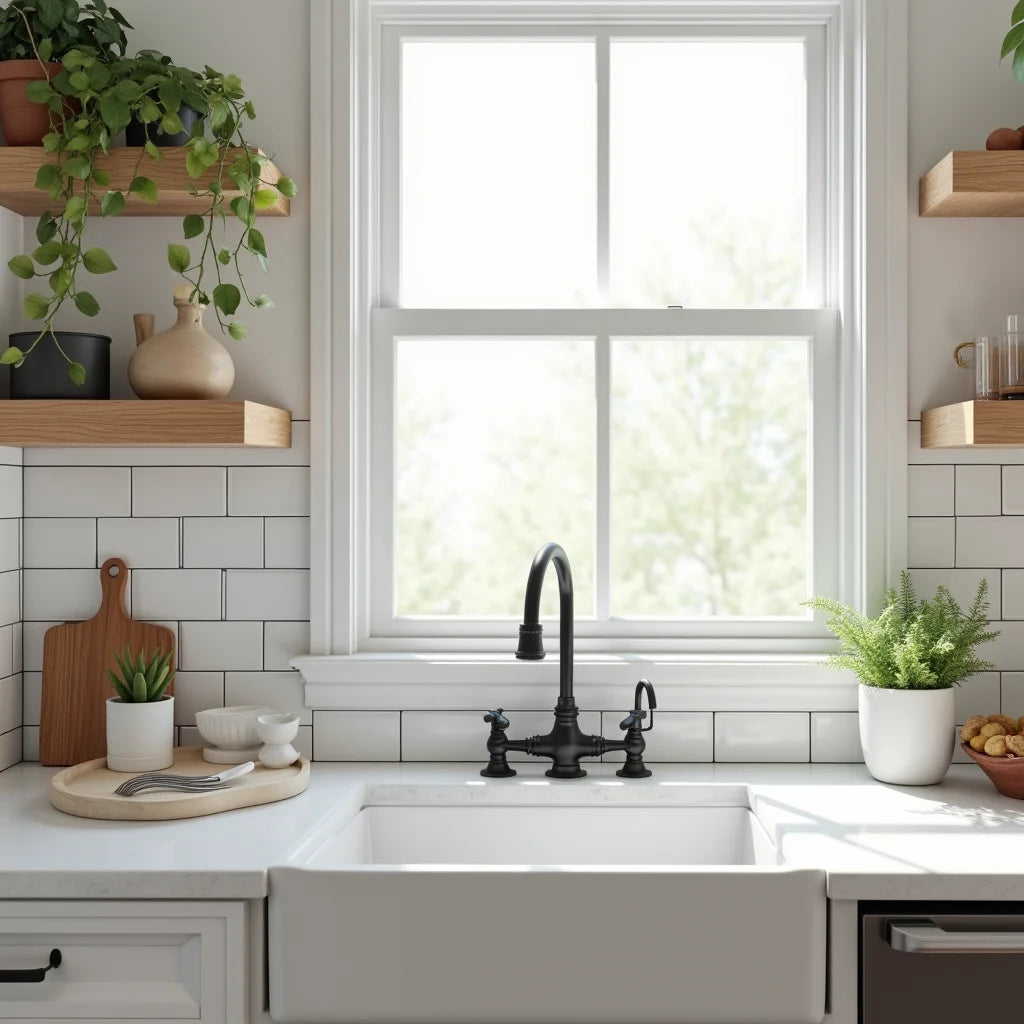
Apron-front models can be installed in several ways. A flush-mount approach sits level with the countertop for a seamless sweep when you wipe crumbs or water into the basin. With an undermount method, the counter slightly overhangs the bowl for a shadow line that many find elegant. Top-mount versions can simplify replacement and limit countertop modifications. In all cases, supportive framing under the bowl is helpful, as these sinks tend to be heavier than standard drop-in models.
Faucet placement is also a consideration. A single-hole deck mount with a pull-down sprayer is compact and ergonomic, while a wall-mount option frees counter space and highlights the apron face. If you prefer a heritage look with modern function, an antique brass pull-down faucet can provide reach and character without overpowering the space.
Gentle care and maintenance
Daily care can be light and consistent. Rinse the bowl after use and wipe with a soft cloth to prevent mineral spots. A mild, non-abrasive cleaner usually handles build-up well. For metal finishes, avoid harsh pads and choose gentle microfiber instead. A removable grid protects the base from heavy pots. To reduce limescale at the source, some households appreciate filtered water; a solid brass faucet with filtered water may lessen spotting and simplify routine upkeep.
Myths vs. Facts
- Myth: Apron-front sinks only suit rustic homes. Fact: They complement modern, transitional, and Scandinavian-inspired kitchens with the right finish and hardware.
- Myth: They always require custom cabinets. Fact: Many models are designed for common 30–36 inch bases, and retrofit kits can support secure installations.
- Myth: They are difficult to maintain. Fact: With mild soap, microfiber cloths, and a sink grid, upkeep stays simple and gentle.
- Myth: Splashing is inevitable. Fact: The deep basin reduces splash, and a thoughtfully chosen sprayer stream further controls water flow.
- Myth: White is the only option. Fact: Stainless, granite composite, copper, and black or colored finishes offer wide variety.
- Myth: They are loud. Fact: Stainless models with sound-deadening pads and composite bowls are pleasantly quiet during use.
Personal Experience
Recently, I helped a friend refresh a small, light-filled kitchen. Storage was tight, and the countertop space was precious. We chose a 30-inch apron-front sink with a practical depth and paired it with a tall, pull-down faucet. The larger bowl made soaking pans easier, while the high-arc sprayer kept the deck clear. We added a simple grid to protect the base and a soft-drying routine after cooking. Within a week, the sink became the calm center of the kitchen: easy to use, quick to clean, and quietly beautiful. That experience reinforced how a few measured decisions can have a gentle, everyday impact.
Final Thoughts & Takeaways
When you bring together the right size, material, and installation method, a farmhouse kitchen sink can feel both welcoming and highly functional. Plan for support under the bowl, pick a faucet that matches the basin’s depth, and lean on simple daily care. If you like guidance on matching fixtures, this concise modern faucet guide may help you compare reach, height, and finishes with confidence. A few thoughtful choices today can keep your kitchen comfortable and efficient for years.
Q&A Section
Is an apron-front sink hard to install?
It can be straightforward with planning. Many models are sized for standard base cabinets, and manufacturers provide templates for cutting the front panel and countertop. Ensuring proper support beneath the bowl is important. If in doubt, a professional installer can help confirm framing and sealing so the basin sits level and secure.
What countertop materials pair well?
Most common surfaces work nicely. Quartz and granite offer strong edges for undermount profiles. Butcher block gives a warm, soft transition to the apron face. With laminate, a top-mount configuration can be practical. The key is a clean, smooth edge and a good seal at the interface to reduce moisture intrusion over time.
How do I prevent scratches and stains?
A removable grid is a gentle safeguard for the base. Rinsing after acidic foods and wiping with a soft cloth helps. For stubborn spots, a mild cleaner and non-scratch pad work well. Metal finishes appreciate microfiber and pH-neutral products. If your water is mineral-heavy, filtered water at the tap can reduce spotting and help maintain a clear, even surface.
About the Author
Written by the Allfixture team, with experience in kitchen fixtures, finishes, and practical installation guidance. We enjoy helping homeowners compare styles and performance in a calm, easy-to-follow way. For faucet ideas that complement apron-front basins, you can explore curated options and thoughtful buying guides at Allfixture. Thank you for reading, and we hope your kitchen projects feel simple and satisfying.