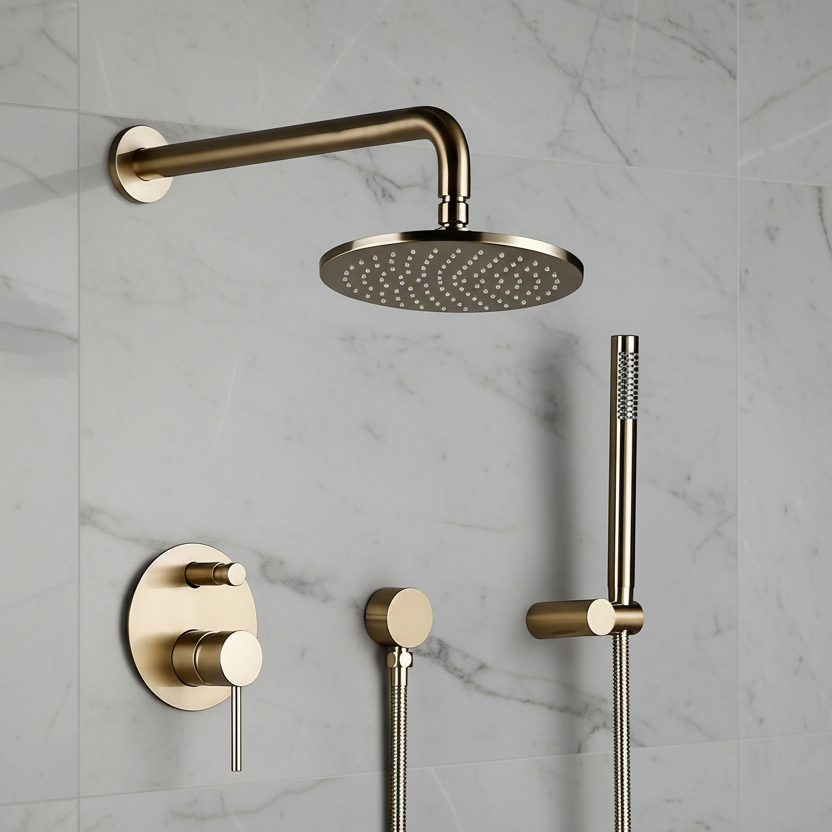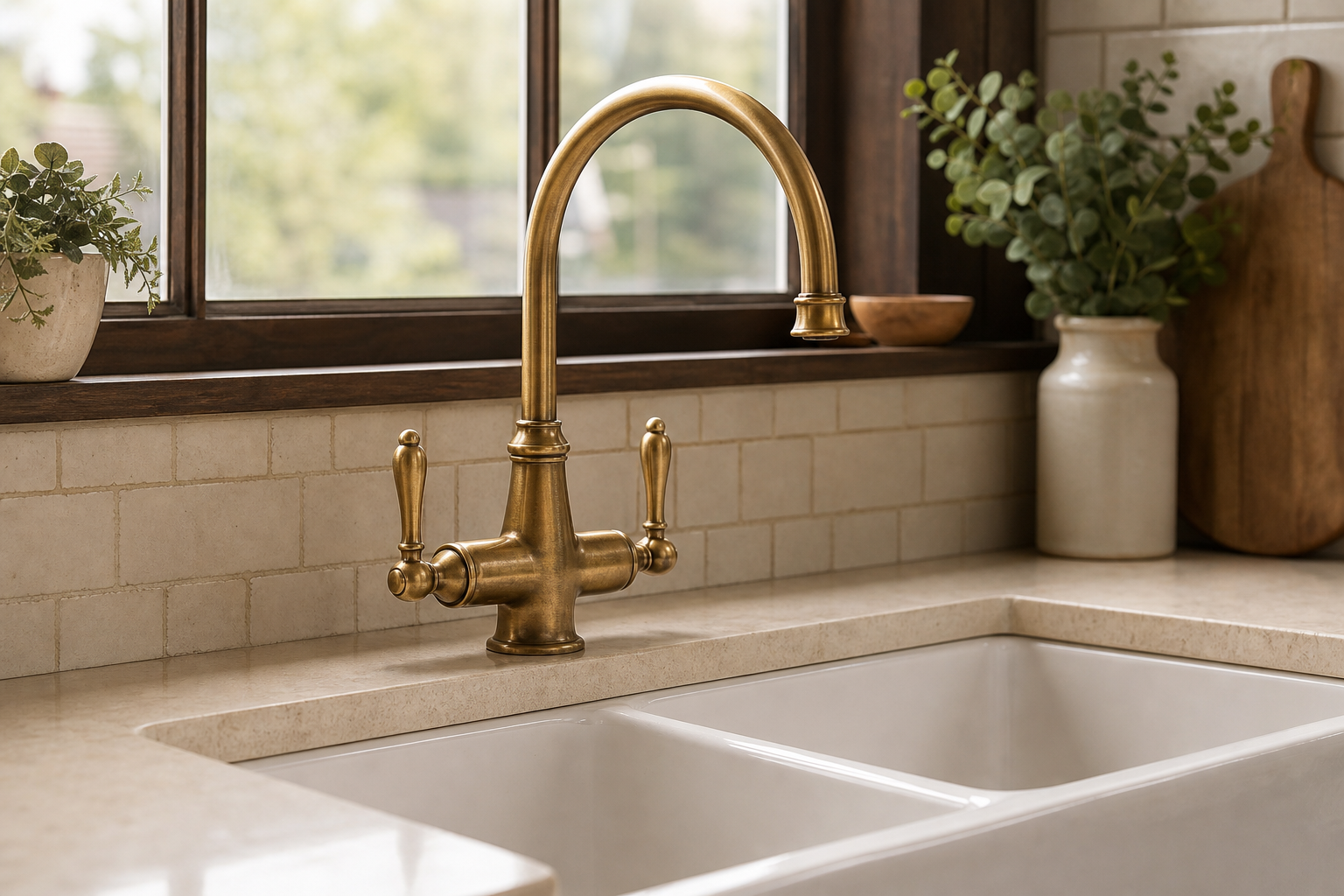
When reimagining a kitchen's aesthetic character, few elements command attention quite like the humble faucet. Positioned at the nexus of form and functionality, this fixture anchors culinary workflows while establishing visual continuity across cabinetry, hardware, and appliances. For homeowners and design professionals pursuing timeless warmth fused with operational longevity, the antique brass kitchen faucet pull down represents an intriguing confluence of heritage craftsmanship and contemporary ergonomics.
Antique brass finishes evoke a patinated elegance reminiscent of turn-of-the-century European estates and artisan workshops. Unlike chromatic metallics that gleam with industrial precision, this finish whispers rather than shouts—its muted golden hues and deliberate tonal variations conjure narratives of age and authenticity. Yet beneath this nostalgic veneer lies modern engineering: ceramic disc valves, flexible hose assemblies, and spray-head technologies that transform everyday kitchen tasks into exercises in efficiency.
Understanding Antique Brass as a Living Finish
Antique brass distinguishes itself from polished or satin counterparts through its intentional imperfections. Manufacturers apply chemical treatments or mechanical processes to replicate the natural oxidation that occurs over decades of exposure. The result is a variegated surface where darker umber tones nestle beside lighter amber passages, creating depth and visual intrigue absent from uniform finishes.
This living finish continues evolving throughout its service life. Fingerprints, water spots, and environmental interactions gently alter the patina, allowing the fixture to develop a unique character that reflects its household's rhythms. For purists who appreciate the wabi-sabi philosophy—finding beauty in impermanence and imperfection—this progressive transformation represents a feature rather than a flaw.
Protective Coatings and Maintenance Considerations
Contemporary antique brass faucets typically incorporate transparent sealants that decelerate oxidation while preserving the vintage aesthetic. These coatings mitigate tarnishing and simplify routine maintenance, permitting gentle cleansing with pH-neutral solutions and microfiber cloths. Abrasive compounds or acidic cleansers compromise the protective layer, accelerating unwanted corrosion and disrupting the finish's carefully orchestrated appearance.
For installations in hard-water territories, mineral deposits may accumulate around aerators and spray heads. Periodic soaking in diluted white vinegar dissolves calcification without harming the brass substrate, restoring optimal flow rates and spray patterns. This maintenance ritual, though modest in scope, extends operational lifespan considerably.
Pull-Down Mechanisms: Ergonomic Innovation for Modern Culinary Workflows
The pull-down configuration revolutionized kitchen functionality by integrating mobility directly into the spout assembly. Rather than relying on fixed arcs of water delivery, users extract the spray head downward along a retractable hose, directing flow precisely where needed—filling stockpots positioned outside the sink basin, rinsing colanders of freshly blanched vegetables, or cleansing the far corners of undermount sinks.
This vertical extraction pathway conserves countertop real estate compared to side-pull variants, making pull-down models particularly suited to compact kitchens or installations beneath overhead cabinetry. The magnetic or weighted docking systems ensure the spray head returns to its cradle reliably, eliminating the frustration of sagging hoses that mar lesser designs.
Spray Pattern Versatility
Contemporary pull-down mechanisms typically offer toggle-activated spray modes. Stream settings deliver concentrated flow for vessel filling, while spray modes distribute water across broader surfaces for efficient rinsing. Some advanced models incorporate sweep spray technology—a blade-shaped pattern that clears debris from sink walls with remarkable efficacy.
The integration of these functional capabilities within an antique brass aesthetic requires thoughtful engineering. Button placements must remain intuitive without disrupting the fixture's period-appropriate silhouette. Successful designs balance technological capability with visual restraint, ensuring modern conveniences don't undermine the timeless character that initially drew the homeowner's interest.
Spotlight: The Maison Antique Brass Pull-Down Spout Kitchen Faucet
Allfixture's Maison collection exemplifies how premium materials and meticulous attention to specification deliver fixtures that satisfy both aesthetic aspirations and practical demands. Constructed from solid brass rather than hollow-body alternatives, this pull-down faucet offers substantive heft and superior corrosion resistance—critical attributes for an appliance subjected to thousands of actuation cycles and constant moisture exposure.
The Maison's antique brass finish undergoes a multi-stage application process that replicates authentic patination. Its gooseneck spout provides ample clearance for oversized cookware, while the ceramic disc cartridge ensures drip-free performance across temperature ranges. The magnetic docking mechanism guides the spray head into position with satisfying precision, maintaining alignment even after years of daily extraction.
For homeowners navigating the tension between period-correct aesthetics and contemporary convenience, the Maison represents a resolved solution. Its dual-function spray head streamlines task sequences, and the installation hardware accommodates single-hole or three-hole configurations, adapting to existing sink geometries without necessitating countertop modifications.
Material Integrity: Why Solid Brass Matters
The composition underlying any kitchen faucet fundamentally determines its longevity and performance reliability. Solid brass—an alloy predominantly comprising copper and zinc—offers exceptional durability, malleability for intricate forming, and inherent antimicrobial properties. Unlike zinc-alloy pot metals or brass-plated plastics, solid brass withstands the thermal cycling, mechanical stresses, and chemical exposures endemic to kitchen environments.
Brass's thermal conductivity prevents the extreme temperature differentials that cause cracking in ceramic or acrylic components. Its density absorbs vibration, reducing the characteristic rattling that plagues lightweight fixtures when water flow accelerates. These material advantages translate into reduced service calls, extended replacement intervals, and sustained aesthetic presentation—outcomes particularly valuable for designers coordinating comprehensive renovation projects with fixed budgets and firm timelines.
Recognizing Quality Indicators
Discriminating between genuine solid brass construction and inferior substitutes requires scrutiny beyond surface appearances. Reputable manufacturers publish complete specifications including material composition, valve type, and finish warranties. Weight provides a reliable proxy—substantial heft typically indicates brass throughout the body, while unexpectedly light fixtures often conceal hollow interiors or polymer cores.
Thread precision at connection points reveals manufacturing standards. Clean, uniform threads that engage smoothly suggest precision machining and quality control, whereas rough or inconsistent threading indicates shortcuts that may manifest as leaks or installation difficulties.
Design Compatibility: Pairing Antique Brass with Cabinet Hardware and Lighting
Successful kitchen design hinges on cohesive material palettes that guide the eye without overwhelming the senses. Antique brass faucets harmonize naturally with cabinetry hardware in complementary finishes—bin pulls, knob accents, and hinge plates that echo the same muted golden tonality. This repetition establishes rhythm without monotony, particularly when cabinet colors provide neutral backdrops that let metallics define the space.
Lighting fixtures offer additional opportunities for finish coordination. Pendant lamps suspended above islands or peninsulas, undercabinet task lighting, and decorative sconces can all incorporate antique brass elements that visually connect to the faucet. This layered approach creates visual depth, transforming disparate fixtures into components of a unified composition.
Balancing Warm and Cool Tones
Kitchens incorporating stainless steel appliances present particular design challenges when introducing antique brass. Rather than viewing these metallics as adversaries, consider them as contrasting notes in a balanced arrangement. The warm undertones of antique brass soften the clinical coolness of stainless steel, while the appliances' reflective surfaces prevent the space from skewing excessively rustic.
Strategic placement matters. Positioning the antique brass faucet as a focal element against neutral backsplash tiles allows it to anchor attention, while dispersing additional brass accents—perhaps in pot racks or shelf brackets—distributes visual weight across the room's geography.
Installation Considerations for Professionals and Skilled DIY Enthusiasts
Mounting an antique brass kitchen faucet pull down demands methodical preparation and appropriate tooling. Most models require a 1.375-inch mounting hole, though verification against manufacturer specifications prevents irreversible countertop errors. Deck plates accommodate multi-hole configurations when replacing legacy faucets, concealing unused apertures while providing stable mounting surfaces.
Supply line connections typically employ compression fittings or braided stainless hoses with ⅜-inch female threads. Applying thread sealant tape in a clockwise direction—wrapping three to four passes around male threads—ensures leak-free junctions without over-tightening that risks cracking brass fittings. Torque should be firm but measured; excessive force deforms gaskets and creates stress points vulnerable to future failure.
Hose Routing and Clearance Verification
The retractable hose powering pull-down functionality requires unobstructed routing from spout to supply connection. Undermount sink clips, garbage disposal units, and water filtration canisters may encroach on available space, necessitating adjustments before finalizing installation. Looping excess hose beneath the sink prevents kinking while allowing smooth extraction and retraction cycles.
Testing the magnetic or weighted docking mechanism prior to completing installation identifies potential interference issues. The spray head should return to its seated position without manual guidance, confirming proper hose length and unimpeded travel path.
Long-Term Performance: What to Expect Over Years of Service
Quality antique brass kitchen faucets, when properly maintained, routinely deliver fifteen to twenty-five years of reliable service. Ceramic disc valves—standard in premium models—outlast traditional compression mechanisms by substantial margins, resisting wear even under high-cycling commercial applications. These valves operate through precisely ground ceramic plates that glide across each other, creating watertight seals without rubber washers prone to degradation.
Aerators and spray heads constitute the most frequently serviced components. Mineral buildup gradually restricts flow, but these elements unscrew for cleaning or replacement without specialized tools. Maintaining a supply of compatible aerator screens and spray-head cartridges minimizes downtime when routine maintenance becomes necessary.
Investing in solid brass construction and reputable finishes transforms a kitchen faucet from a consumable commodity into a durable asset that appreciates aesthetically as it develops character through daily use.
Addressing Common Questions About Antique Brass Kitchen Faucets
Will the Finish Wear Off Over Time?
Premium antique brass finishes incorporate the coloration into the surface through chemical or physical processes, not merely as superficial plating. While protective clear coats may eventually wear in high-contact zones, the underlying brass retains its warm tonality. Some users deliberately accelerate patina development by forgoing protective treatments, embracing the authentic oxidation that creates increasingly distinctive appearances.
How Does Antique Brass Perform in Humid Climates?
Brass's inherent corrosion resistance makes it well-suited to humid environments, provided the finish incorporates adequate sealants. Coastal installations may experience accelerated patination due to airborne salts, though this typically enhances rather than detracts from the antique aesthetic. Regular cleansing removes salt deposits before they penetrate protective coatings.
Can Antique Brass Faucets Accommodate Water Filtration Systems?
Most pull-down faucets provide sufficient mounting-deck real estate for auxiliary components like filtered water dispensers or soap pumps. Some manufacturers offer integrated filtration pathways within the faucet body itself, though these systems require periodic cartridge replacement and may slightly reduce overall flow rates.
Value Proposition: Balancing Initial Investment Against Lifecycle Costs
Antique brass kitchen faucets command premium pricing relative to basic chrome or plastic alternatives, but this differential narrows considerably when evaluated across service lifespans. A solid brass fixture priced at four hundred dollars that functions flawlessly for twenty years costs twenty dollars annually—a modest figure compared to replacing budget models every three to five years at one hundred fifty dollars per iteration.
The table below illustrates comparative lifecycle economics:
| Fixture Type | Initial Cost | Expected Lifespan | Annual Cost |
|---|---|---|---|
| Budget Chrome Faucet | $150 | 4 years | $37.50 |
| Mid-Range Stainless | $275 | 10 years | $27.50 |
| Premium Antique Brass | $425 | 20 years | $21.25 |
Beyond mere financial calculus, premium fixtures eliminate the disruption and labor costs associated with repeated replacements. For contractors managing client relationships, specifying durable components reduces callback risks and reinforces reputations for quality advocacy.
Sourcing Decisions: Navigating the Fixture Marketplace
The proliferation of online retailers has democratized access to premium fixtures while simultaneously complicating selection processes. Discerning buyers prioritize vendors offering comprehensive technical specifications—valve types, flow rates, material certifications, and finish warranties—rather than marketing platitudes. Transparent return policies and expedited shipping mitigate purchase risks, particularly for remote buyers unable to physically evaluate products.
Allfixture exemplifies this customer-centric approach, publishing detailed specifications alongside each listing and backing purchases with a thirty-day return window. Free expedited shipping eliminates the cost uncertainties that complicate budget forecasting, while the focus on solid brass construction ensures product consistency across catalog offerings.
Evaluating Finish Warranties
Reputable manufacturers stand behind their finishes with substantive warranties—often ranging from five years to lifetime coverage against tarnishing, corrosion, or flaking. These guarantees signal confidence in material quality and application processes. Conversely, abbreviated warranty periods or exclusions for "normal wear" suggest finishes unlikely to withstand daily kitchen rigors.
Reading warranty fine print reveals crucial details: Does coverage extend to commercial installations? Are replacement components provided, or merely repair credits? What documentation must purchasers retain to validate claims? Answering these questions before finalizing purchases prevents unpleasant discoveries when service issues eventually surface.
Final Considerations: Making an Informed Selection
Choosing an antique brass kitchen faucet pull down involves reconciling aesthetic preferences with functional requirements and budget realities. Homeowners pursuing historically informed design languages find these fixtures indispensable for achieving authentic period atmospheres. Designers appreciate the versatility antique brass offers—equally at home in farmhouse vernaculars, transitional aesthetics, and even industrial lofts seeking warmth amid exposed ductwork and concrete floors.
The pull-down mechanism's operational advantages prove particularly compelling for households managing diverse culinary tasks. From rinsing produce to filling pasta pots, the mobility this configuration provides streamlines workflows in ways fixed-spout alternatives cannot match. Combined with the proven durability of solid brass construction, these faucets represent investments that compound value across decades of service.
For those committed to minimizing environmental footprints, longevity itself constitutes an ecological virtue. Fixtures lasting twenty-plus years avoid the resource consumption and waste generation inherent in frequent replacements. This alignment of durability, aesthetics, and sustainability positions antique brass kitchen faucets as solutions addressing multiple stakeholder priorities simultaneously.
Ultimately, the decision to incorporate an antique brass kitchen faucet pull down into a culinary space reflects a commitment to quality over expediency, character over conformity, and enduring value over disposable convenience. As kitchens continue evolving from purely functional zones into social hubs where families gather and memories accumulate, the fixtures anchoring these spaces deserve consideration commensurate with their central role in domestic life.