GPM is the most important number on a faucet spec sheet that nobody explains. It determines how fast your pot fills, whether your shower satisfies, what your water bill says — and in several states, what you're legally allowed to install. Two minutes here and you'll read flow rates like a plumber.
What GPM Means
Gallons per minute: how much water a fixture delivers wide-open. Every modern fixture is flow-limited by an internal aerator or restrictor, and federal law caps the categories: bathroom faucets at 1.2–1.5 GPM (varies by state), kitchen faucets at 1.8–2.2, showerheads at 2.5 — with California, Colorado, and several other states enforcing stricter limits.
The Numbers in Real Life
| Fixture | Typical GPM | What It Feels Like |
|---|---|---|
| Bathroom faucet | 1.0–1.2 | Ample for washing and brushing; aeration keeps the stream feeling full |
| Kitchen faucet | 1.5–1.8 | Fills a stockpot in under a minute; spray mode concentrates for rinsing |
| Rain showerhead | 1.8–2.5 | Soft, enveloping coverage — width over force |
| Handheld sprayer | 1.8–2.5 | Targeted rinse power for hair, kids, and cleaning the enclosure |
Why Lower GPM Isn't Worse
Modern aerators mix air into the stream, so a 1.2 GPM bathroom faucet feels nearly identical to the 2.2 GPM faucets of two decades ago while using almost half the water. For a bathroom sink — where water runs in short bursts — high flow is pure waste. The kitchen is different: filling pots is a volume task, which is why kitchen faucets are allowed, and deserve, higher flow. Every listing in our kitchen faucet and bathroom faucet collections states its flow rate in the specifications table.
Multi-Outlet Showers: Where GPM Math Matters
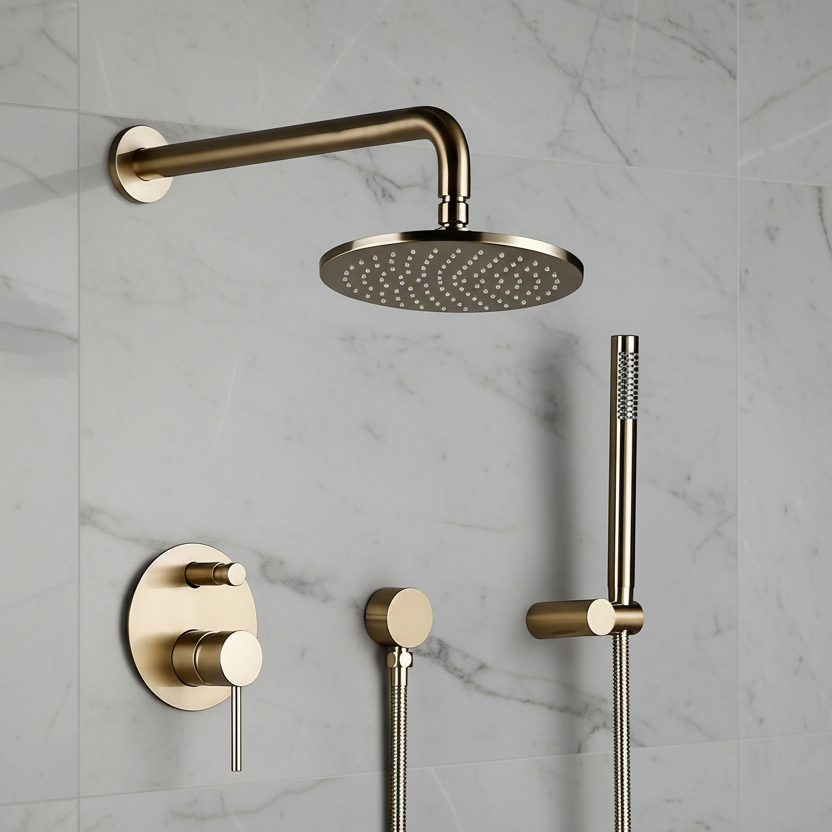
A rain head (2.5) plus a running handheld (2.5) demands 5 GPM from your supply — more than many homes, and most tankless water heaters, comfortably deliver hot. This is why quality shower systems use diverters that alternate outlets rather than running everything at once, and why "more outlets" isn't automatically "more luxury." Match total simultaneous GPM to your water heater's output and your house pressure, and every mode performs.
Frequently Asked Questions
Can I increase my faucet's GPM?
The aerator sets it, and swapping to a higher-flow aerator is possible where legal — but check state code first. In restricted states, retailers can't ship higher-flow parts.
Does low GPM affect hot water?
Indirectly, and positively for tank owners: lower flow drains the tank slower. Tankless owners should check the heater's minimum activation flow — very low-flow fixtures can fail to trigger some units.
What GPM should I choose for a kitchen faucet?
1.8 GPM hits the sweet spot: fast pot-filling with sensible use. Serious cooks in unrestricted states may prefer 2.2; the difference is about 20 seconds on a large stockpot.