Updated on: 2025-12-11
Designing a bathroom that feels calm, cohesive, and easy to care for starts with the right mix of materials, colors, and metal tones. This guide walks through a thoughtful process to help you select surfaces, trims, and fixtures that work beautifully together. You will also find practical tips for durability and maintenance, plus ideas for testing choices before you commit. By the end, you will feel more confident choosing bathroom finishes that reflect your taste and support daily comfort.
Table of Contents
- 1. Practical Guide
- 1.1 Define your vision and constraints
- 1.2 Choose a color story
- 1.3 Select primary surfaces
- 1.4 Pick metal tones and hardware
- 1.5 Coordinate plumbing fixtures
- 1.6 Decide on countertop and vanity materials
- 1.7 Balance textures and sheen
- 1.8 Create a sample board and test
- 2. Key Advantages
- 3. Summary & Next Steps
- 4. Q&A Section
- 5. About the Author
Choosing materials and metals for a bath can feel complex, especially with so many beautiful options. A gentle plan can make the process enjoyable. In the guide below, you will find a clear path to align look, feel, and function. We will consider color, surfaces, plumbing fittings, and care requirements, so your space looks inviting and serves your routine with ease. To support your decisions, we will also explore simple ways to test combinations before anything is installed.
Practical Guide to Bathroom Finishes
Define your vision and constraints
Begin by noting what you love and what you need. Gather three to five inspiration images and highlight shared traits, such as warm neutrals, matte metals, or patterned tile. Next, outline practical limits: budget, moisture exposure, and how much time you prefer to spend on cleaning. This short list will guide all choices and help you avoid overbuying or selecting materials that do not fit your lifestyle.
Choose a color story
Pick a simple palette of two to three main hues with one accent. Many people select a quiet base (white, cream, taupe, or soft gray), a grounding shade (charcoal, olive, or navy), and a subtle highlight (brass, blush, or natural wood). Keep undertones consistent: warm with warm, cool with cool. A cohesive color story makes tile, paint, and metals feel harmonious and calm.
Select primary surfaces
Surfaces set the tone. Porcelain tile offers stability and broad styles, from stone looks to terrazzo patterns. Ceramic works well for walls and niches. Large-format tile reduces grout lines and visual busyness, while smaller mosaics add character underfoot. If you prefer painted walls, consider moisture-resistant formulas and add ventilation. In wet zones, prioritize slip resistance and easy-clean grout in a matching or slightly darker shade.
Pick metal tones and hardware
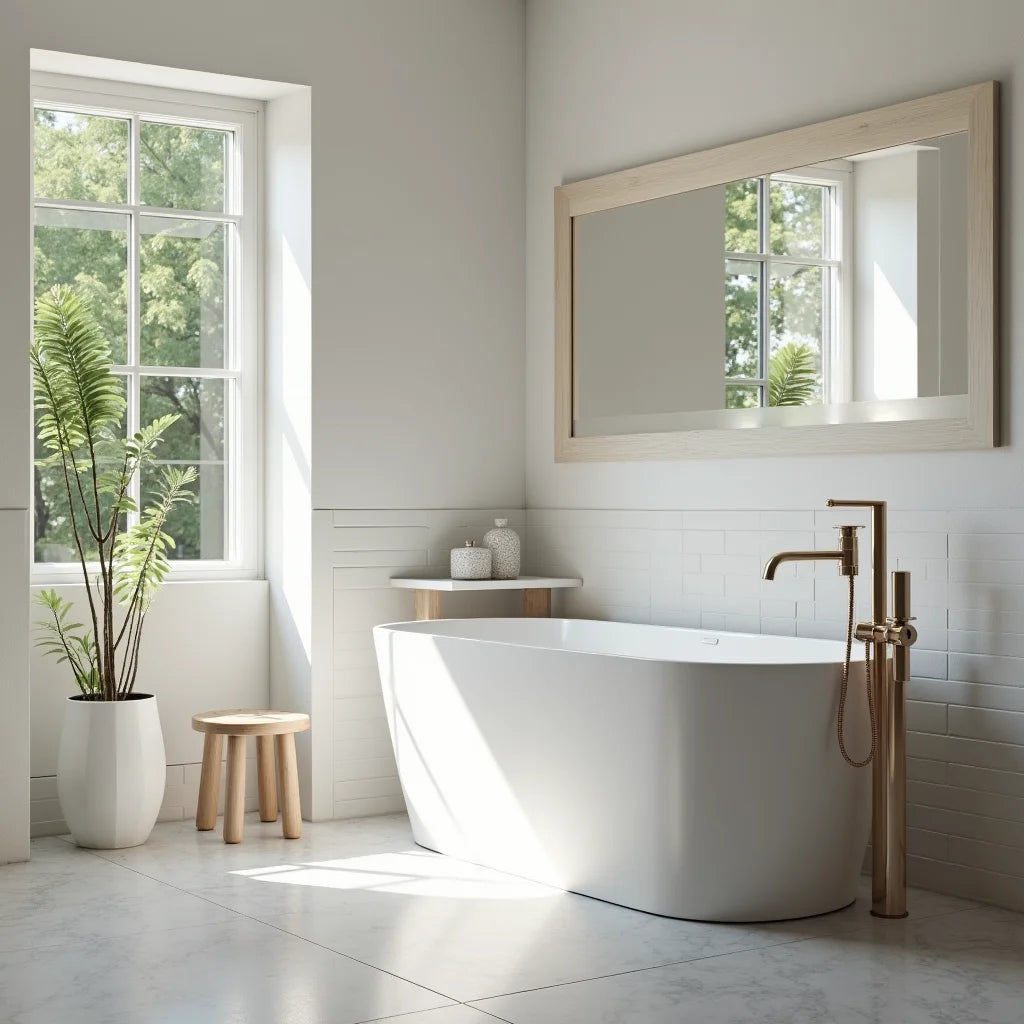
Metal accents bring a room to life. Brushed nickel, matte black, polished chrome, and warm brass each create a distinct mood. If you enjoy mixing metals, choose one dominant tone and one supporting tone for balance. Keep the same sheen family where possible (all brushed or all polished) so pieces feel like a set. Hardware, towel bars, and trim should echo your chosen metal story.
Coordinate plumbing fixtures
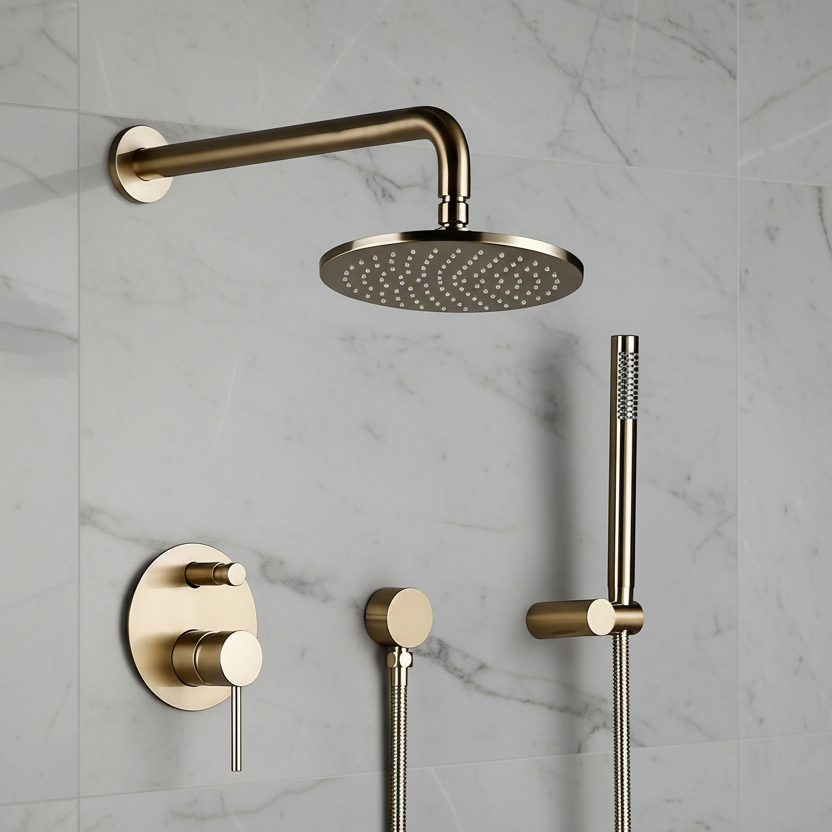
Plumbing pieces bridge style and function. Consider silhouette, handle shape, and spray options along with finish. Explore curated collections for bathroom faucets that match your metal choice, and review shower sets for compatible valves and trims. If you enjoy a timeless look, a solid brass shower set can provide durability and a classic presence that pairs nicely with stone-look tile.
Decide on countertop and vanity materials
Countertops should be durable and straightforward to maintain. Quartz is a popular, low-care option with many patterns. Solid surface materials offer smooth seams and gentle edges. If you like natural stone, consider honed finishes to minimize etching visibility. For vanities, sealed wood tones add warmth, while painted cabinetry can reinforce your color story. Choose simple, well-sealed edges for easier cleaning.
Balance textures and sheen
Contrast creates comfort. Pair smooth countertops with subtly textured tile, or matte metals with glossy walls. If floors are textured for grip, keep the shower walls calmer to avoid visual noise. Sheen also matters: matte reduces glare and fingerprints, satin offers a gentle glow, and polished reflects more light. A balanced mix helps the room feel layered yet peaceful.
Create a sample board and test
Collect swatches and samples and view them together in natural and artificial light. Place tile next to metal pieces, a countertop chip, paint swatches, and a cabinet finish. Observe them morning and evening to see how tones shift. If possible, test a grout color on a small board. This step often reveals whether your selections feel cohesive—or if a subtle adjustment will improve the whole space.
Key Advantages
- Clarity: A simple plan reduces overwhelm and speeds up decisions.
- Harmony: Consistent undertones and coordinated metals create visual calm.
- Durability: Materials chosen for moisture and wear handle daily use more gracefully.
- Maintenance ease: Thoughtful selections reduce effort over the long term.
- Budget control: A defined palette limits impulse purchases and rework.
- Confidence: A sample board allows you to test choices before installation.
Summary & Next Steps
A peaceful bath starts with a concise vision, a restrained color story, and compatible surfaces. By choosing durable materials and coordinating metals and fixtures, you set your space up for comfort and easy care. If you would like more support with selections, browse practical design tips in our buying guides. With a few samples and a quiet plan, your approach to bathroom finishes can feel clear, organized, and rewarding.
Q&A Section
What finish helps reduce visible water spots?
Brushed and matte metal tones usually show fewer spots and fingerprints than highly polished options. Brushed nickel and satin brass are good examples. Texture and sheen help disguise water marks, and regular gentle wiping keeps surfaces looking fresh. If your water is mineral-rich, consider a squeegee-and-cloth routine for quick care after showers.
How can I mix metals without clashing?
Pick one dominant metal and one supporting metal, then repeat them in at least three places each. For instance, use brushed nickel for faucets and shower trims, and introduce matte black in hardware and a mirror frame. Keep undertones aligned—cool with cool, warm with warm—and aim for similar sheen levels so the mix feels intentional rather than random.
Which materials are easiest to maintain in a busy household?
Porcelain tile, quartz countertops, and brushed metal trims tend to be straightforward. Porcelain resists moisture and staining, quartz handles daily use well, and brushed metals minimize visible smudges. Large-format tile with matching grout lines also helps reduce cleaning effort. Simple silhouettes with fewer ridges or grooves can further simplify upkeep.
About the Author
Allfixture shares practical, design-forward guidance to help people choose fixtures and materials with confidence. Our team blends product knowledge with real-world installation insights to simplify decisions. We focus on clarity, durability, and timeless style across kitchens and baths. Thank you for reading—we hope this guide supports your next project.