Updated on: 2025-12-13
Sharing a bathroom can be smoother with a well-planned vanity built for two. This guide walks through space planning, storage, materials, and installation basics so you can choose confidently. You will also find a practical checklist, quick answers to common questions, and gentle tips that help you avoid costly errors. Feel free to use the sections most relevant to your project and revisit them as your plan evolves.
- Common Mistakes
- Buyer’s Checklist
- Measure Your Space
- Plan Storage
- Choose Materials & Finishes
- Plumbing & Installation
- FAQ Section
- Wrap-Up & Final Thoughts
- Q&A Section
- About the Author
When two people share a primary bath, a double vanity can gently reduce morning bottlenecks, add storage, and bring balance to your layout. The right choice depends on your room’s dimensions, plumbing, and daily habits. In the guide below, you will learn what to measure, which materials hold up, and how to plan fixtures that feel coordinated without fuss. If you are upgrading an existing bath or starting fresh, the tips here are designed to keep your project calm, clear, and on budget.
Common Mistakes When Choosing a Double Vanity
- Prioritizing looks over layout: A stunning cabinet can still feel cramped if door swings collide or the walkway narrows. Confirm clearances around doors, drawers, and adjacent walls before you buy.
- Ignoring center-to-center spacing: Two basins should offer comfortable elbow room. Many people prefer about 30 inches from center to center, but confirm what feels right for those who will use it daily.
- Overlooking counter depth and faucet reach: Shallow counters paired with tall, rear-set faucets can splash. Check spout reach relative to the bowl’s drain to encourage a steady, tidy stream.
- Underestimating storage needs: Two users often mean more skincare, hair tools, and small items. Mix drawers for daily reach with deeper compartments for bulk goods and linens.
- Forgetting lighting and mirrors: Without thoughtful lighting, even the best cabinet struggles. Plan mirror width, sconce placement, and brightness so two people can prep without shadows.
- Assuming plumbing is “plug and play”: Existing rough-ins may not align with two sinks. It is helpful to confirm drain, supply, and vent positions early to avoid costly changes later.
- Buying materials that need constant fuss: Some counters etch or stain easily. If you prefer low-maintenance care, favor durable, sealed surfaces and water-resistant cabinet construction.
Buyer’s Checklist
Use this friendly checklist to compare options and keep your plan organized.
Measure Your Space
- Measure wall width at multiple heights to confirm it is true and plumb.
- Note door swings, shower glass clearance, and hallway traffic lines.
- Allow comfortable aisle width; many find 36 inches in front of the cabinet pleasant.
- Check counter height preferences; 32–36 inches suits most adults, but measure what feels natural for you.
- Mark existing outlets and consider where hair tools will plug in.
Plan Storage
- List daily-use items and assign easy-access drawers for them.
- Reserve deeper cabinets for towels and bulk supplies.
- Choose organizers that keep small items upright and visible.
- Consider a bank of center drawers if plumbing routes through the sides.
Choose Materials & Finishes
- Cabinet box: Furniture-grade plywood often balances durability and value. Look for sealed edges and moisture-resistant finishes.
- Countertop: Quartz, porcelain slab, and sealed natural stone each offer distinct looks. If you prefer low upkeep, lean toward non-porous or well-sealed surfaces.
- Hardware: Solid-metal pulls feel sturdy and last. Test comfort and grip.
- Fixtures: Coordinated taps create a calm look. Explore thoughtfully matched bathroom faucets to complete your design.
Plumbing & Installation
- Confirm valve locations, drain positions, and stud layout for secure mounting.
- Plan separate shutoff valves for each basin when possible.
- Decide on widespread, centerset, or wall-mounted taps early to place holes precisely.
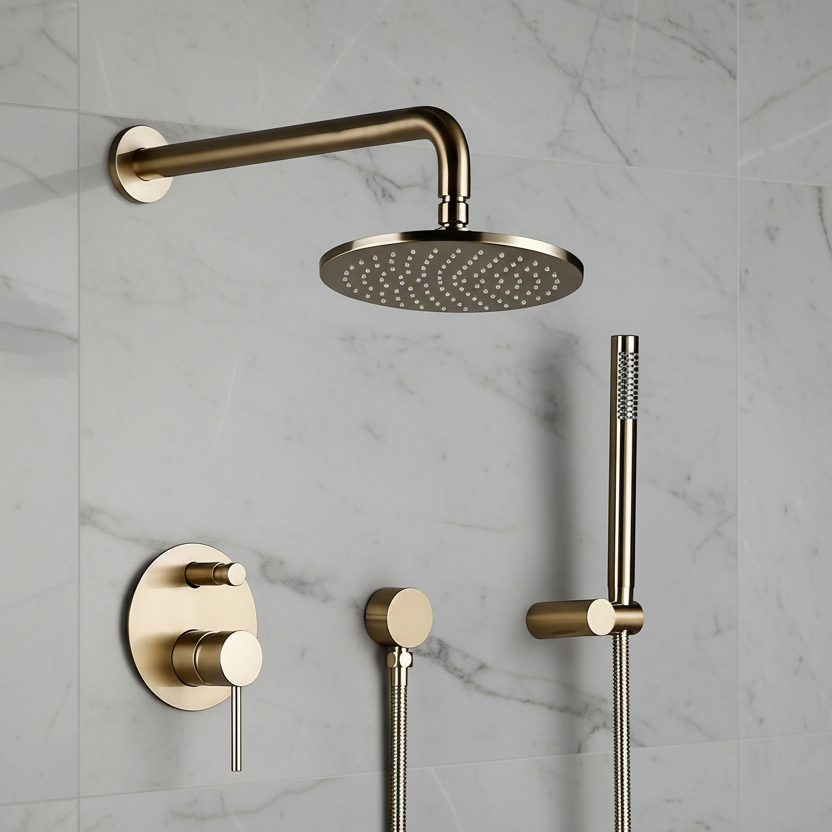
- Coordinate with your shower plan for a unified look; matching finishes with your shower sets can feel cohesive.
- Dry-fit the cabinet before final plumbing connections to confirm level and spacing.
FAQ Section
What width works well for two users?
Many shared layouts feel comfortable starting around 60 inches wide, which allows two bowls and usable counter surface. Larger rooms may support 72 inches or more. Carefully assess wall width, traffic space, and mirror placement before deciding.
Do two sinks require two drains?
Most two-basin configurations use separate bowls and trap assemblies. Your existing rough-ins may support this, but alignment varies by home. Checking with a licensed professional is a considerate step to verify local code and the simplest path forward.
Which countertop materials are easiest to maintain?
Engineered quartz and porcelain slabs are popular for everyday care because they resist stains and do not require frequent sealing. Sealed granite also performs well in many households. Whatever you choose, follow the manufacturer’s care guidance for best results.
Wrap-Up & Final Thoughts
Choosing the right two-basin vanity is about comfort, coordination, and easy upkeep. With clear measurements, smart storage, and durable materials, your bath can feel calm and welcoming for years. If you would like a gentle place to start, you might browse curated best sellers for inspiration, then review our practical buying guides to refine the details. When the plan feels balanced, selecting the right double vanity often becomes a pleasant finishing touch.
Q&A Section
Wall-mounted or freestanding: which suits small bathrooms?
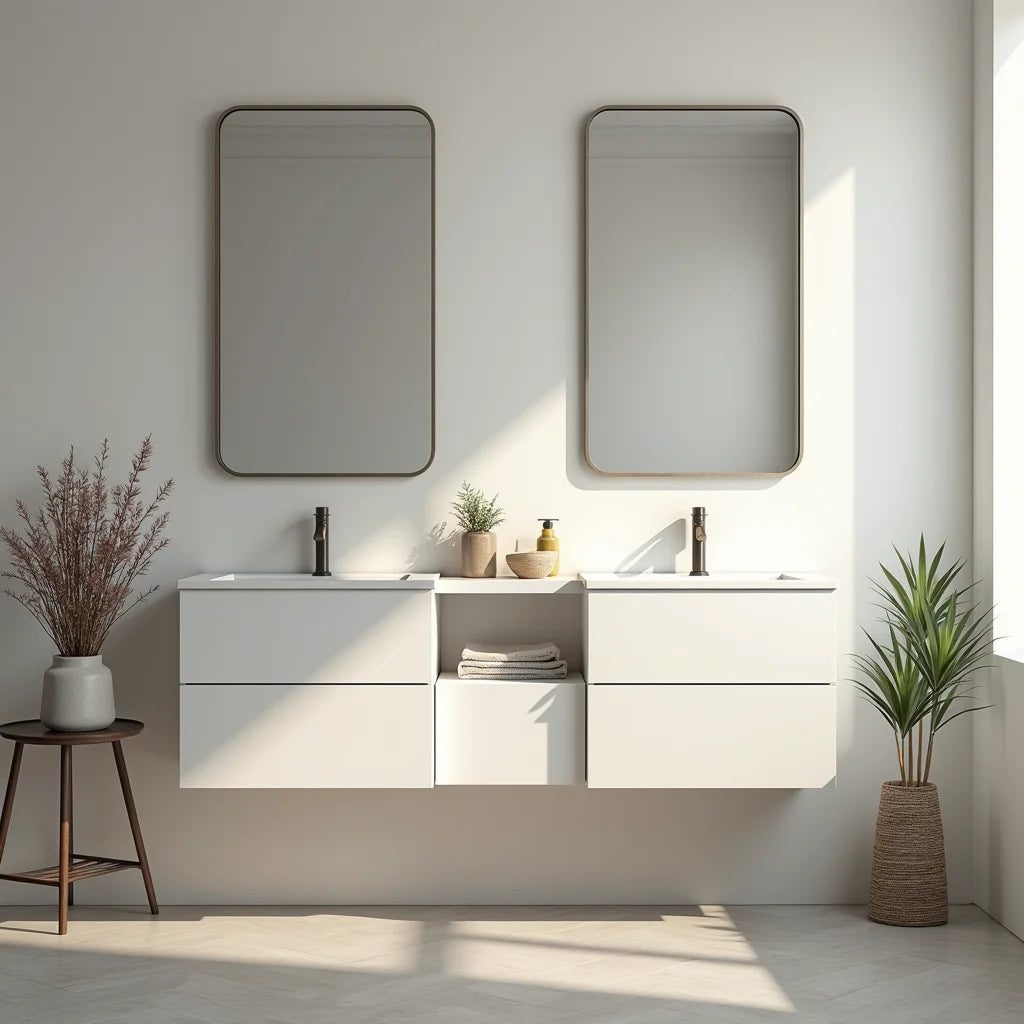
A wall-mounted, floating cabinet can make a compact room feel open by revealing more floor area. It also simplifies sweeping underneath. If you prefer extra storage and easier installation, a freestanding base can be a practical alternative.
Undermount vs. vessel sinks: what is easier day to day?
Undermount bowls offer a smooth wipe-down experience because there is no rim to clean around. Vessel bowls create a design focal point and can raise the effective height for taller users. Consider faucet reach and splash control when deciding.
How can I set a thoughtful budget?
List core items first: cabinet, counter, basins, faucets, and hardware. Then add allowances for plumbing parts, lighting, mirrors, and potential touch-ups to paint or tile. A small contingency for unforeseen adjustments can keep the process calm if plans shift.
About the Author
Written by the Allfixture Editorial Team, specialists in thoughtful bath and kitchen fixture guidance. We share clear, friendly insights to help you plan spaces that feel balanced and enduring. Thank you for reading, and we hope your project unfolds smoothly.