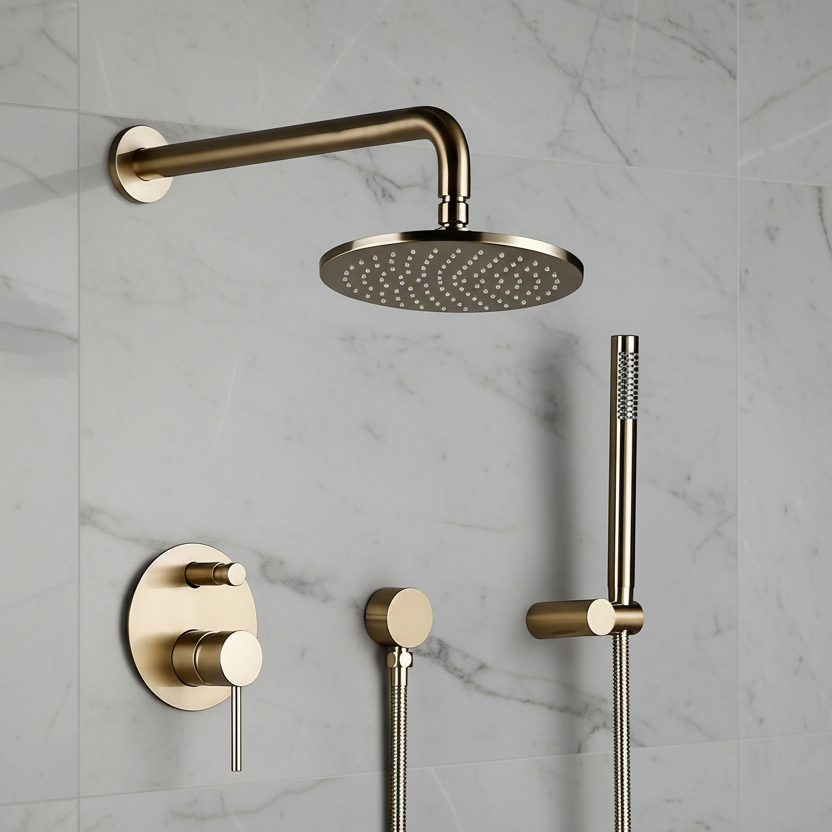
Gold is back in the bathroom — but "gold" is really two different finishes with two different personalities. Brushed gold is soft, satin, and forgiving. Polished gold is bright, reflective, and formal. Choose well and the finish elevates everything around it; choose against your space's character and it fights the room daily. Here's how to get it right.
This guide compares the two tones on looks, upkeep, and styling, then maps each to the spaces where it thrives. For the broader finish landscape — including how gold compares to warmer vintage tones — our brushed gold buying guide and antique brass patina guide go deeper on each family.
What Actually Differs
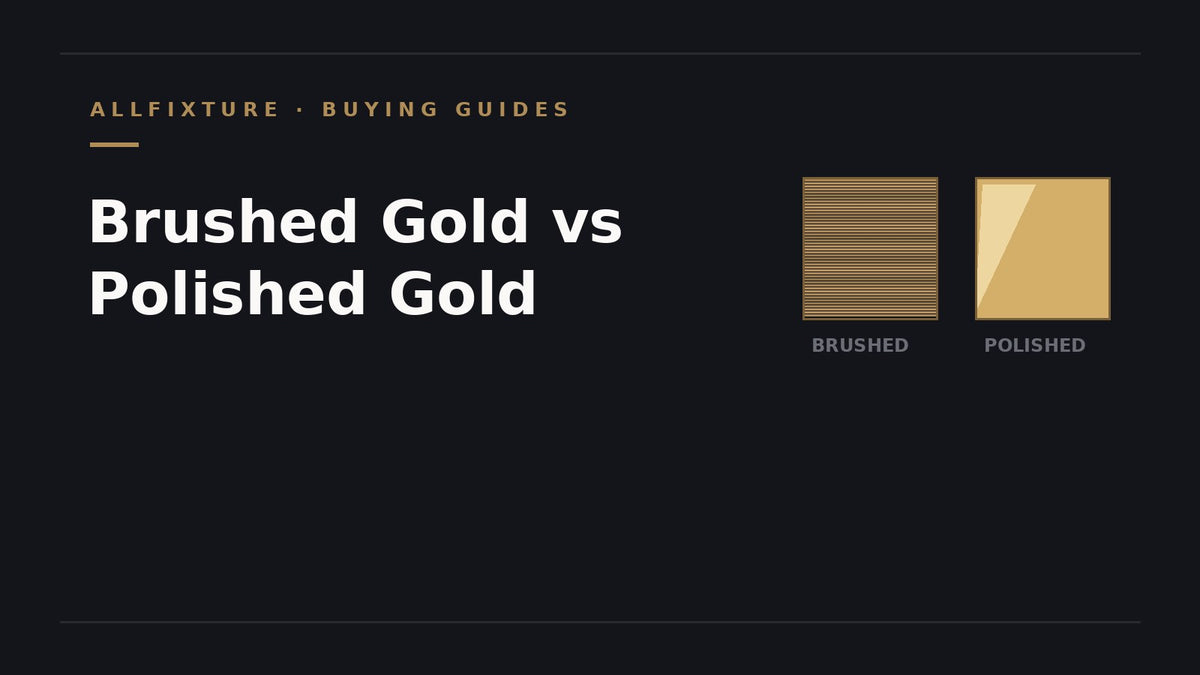
Both finishes start from the same place: a solid brass fixture body. The difference is the surface treatment. Brushed gold is finished with fine directional abrasion that leaves a soft satin sheen — light diffuses across it rather than bouncing off. Polished gold is buffed to a mirror and typically sealed with a PVD layer, so light reflects sharply and the color reads brighter and more saturated.
That one manufacturing difference drives everything downstream: how each tone handles fingerprints, water spots, scratches, and — most importantly — how each behaves in a room.
Side-by-Side Comparison
| Factor | Brushed Gold | Polished Gold |
|---|---|---|
| Surface character | Satin, diffused, muted warmth | Mirror-bright, saturated, formal |
| Fingerprints & water spots | Hides them remarkably well | Shows them — plan to wipe daily |
| Fine scratches | Blend into the brushed grain | More visible on the mirror surface |
| Design temperature | Relaxed, contemporary, organic | Glamorous, traditional, statement |
| Pairs best with | Matte tile, stone, wood, muted palettes | Marble, lacquer, mirror, saturated color |
| Daily upkeep | Occasional wipe-down | Frequent polishing to stay pristine |
| Trend risk | Low — the modern default gold | Moderate — bolder, more era-specific |
The Case for Brushed Gold
Brushed gold is the livable gold. The satin surface scatters light, so the finish glows rather than glints — warm without shouting. It disguises the everyday evidence of a working bathroom: fingerprints vanish into the grain, water spots dry invisible, and micro-scratches never announce themselves. That forgiving nature is why brushed gold has become the default choice for busy family bathrooms that still want warmth.
Stylistically it partners with almost anything: white counters, gray stone, deep green or navy vanities, warm wood. Browse our gold bathroom faucets — the brushed options dominate for exactly these reasons — or see the tone carried through an entire shower in our gold shower systems.
The Case for Polished Gold
Polished gold is jewelry for the room. Against white marble it delivers the classic luxury-hotel look; against deep saturated walls it becomes the room's light source, catching and throwing every lumen. If the design goal is glamour — a formal powder room, a statement primary bath, a vanity meant to be photographed — polished gold does what no satin finish can.
The honest price of that brilliance is maintenance: a mirror finish shows everything, so polished gold belongs in spaces where a daily wipe-down is realistic, or in lower-traffic rooms where it stays pristine on its own. In the kitchen, the same logic applies to our gold kitchen faucets — brushed for the daily workhorse sink, polished for the entertainer's bar or prep sink.
The Honest Trade-Offs
Can You Mix Them?
Carefully. The two golds are close enough in hue that a mix can read as an accident rather than a choice. If you want finish contrast in one bathroom, a cleaner move is pairing gold with a genuinely different tone — matte black hardware with brushed gold plumbing is the classic modern pairing, and gold accents over chrome basics keeps budgets sane. Keep all wet-area plumbing (faucet, shower trim, tub filler) in a single gold tone, then vary the accessories.
Frequently Asked Questions
Will brushed gold and polished gold match if I use both?
They'll coordinate in color but differ clearly in sheen. Treat them as two finishes, not one — use one tone per zone rather than alternating piece by piece.
Does polished gold tarnish?
Quality polished gold on solid brass is PVD-sealed and won't tarnish under normal use. What you'll manage is surface evidence — spots and prints — not the finish itself degrading.
How do I clean gold finishes safely?
Mild soap, warm water, microfiber cloth. Never abrasive pads, ammonia, or acidic cleaners — they dull brushed grain and haze polished surfaces alike. Dry polished gold after cleaning to prevent water spots.
Is gold going out of style?
Warm metals have held the top of bathroom design for a decade, and brushed gold in particular has settled into 'modern classic' territory alongside matte black. Polished gold cycles with glamour trends but never disappears from traditional and luxury design.
Considering antique brass? Read the complete guide: Antique Brass Bathroom Fixtures.