Selecting the perfect kitchen faucet transforms daily culinary rituals from mundane chores into moments of functional elegance. The modern marketplace presents an overwhelming array of spouts, handles, and finishes—each promising innovation, durability, and aesthetic harmony. Yet beneath the surface-level allure lies a constellation of technical specifications that separate fleeting trends from enduring investments. This comprehensive kitchen faucet guide navigates the intricate terrain of finish durability, operational mechanics, and hydrodynamic performance to empower informed purchasing decisions that align with both design aspirations and practical necessities.
Understanding Kitchen Faucet Finishes: Beyond Surface Beauty
The finish applied to your kitchen faucet serves as both protective armor and aesthetic statement. While chrome dominated residential installations for decades, contemporary manufacturing techniques have unleashed a spectrum of coatings that marry visual appeal with molecular-level resilience. Solid-brass construction beneath these finishes provides the structural integrity required for years of thermal cycling and mechanical stress.
Chrome and Polished Nickel: The Classic Contenders
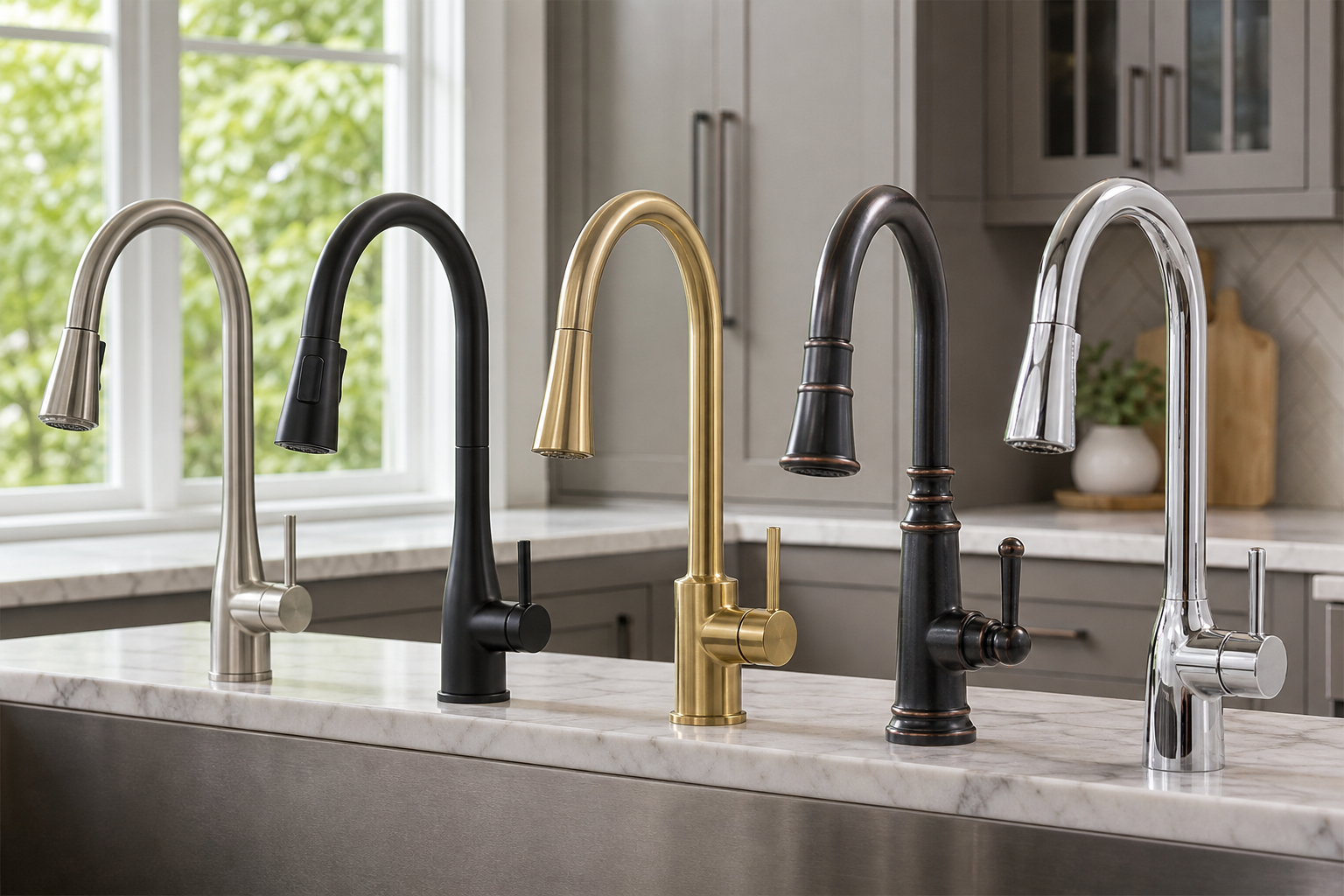
Polished chrome remains ubiquitous in contemporary kitchens due to its mirror-like reflectivity and remarkable resistance to tarnishing. This electroplated finish bonds at the molecular level with the underlying brass substrate, creating a barrier against oxidation and moisture penetration. Polished nickel offers a warmer tonality—slightly softer in reflectivity—that complements both traditional cabinetry and transitional design schemes. Both finishes demonstrate exceptional longevity when properly maintained, though nickel may develop a gentle patina over extended periods, adding character rather than degradation.
Matte Black and Brushed Gold: Contemporary Statements
The ascendance of matte black fixtures represents more than aesthetic trend-chasing. Physical Vapor Deposition (PVD) coatings create these non-reflective surfaces through atomic-level bonding that surpasses traditional plating in durability metrics. Brushed gold and champagne bronze finishes employ similar technologies, resisting scratches, corrosion, and chemical exposure with remarkable tenacity. These finishes require minimal maintenance beyond routine wiping, making them pragmatic choices for high-traffic culinary environments where functionality cannot yield to vanity.
Living Finishes: Embracing Temporal Evolution
Unlacquered brass and oil-rubbed bronze represent intentional departures from static perfection. These living finishes evolve through oxidation and handling, developing unique patinas that reflect usage patterns and environmental conditions. Homeowners who appreciate the narrative embedded in aging materials often gravitate toward these options, accepting variability as authenticity rather than imperfection. The underlying solid-brass construction ensures structural soundness even as surface characteristics transform over seasons and years.
Functional Configurations: Matching Mechanics to Methodology
Operational design profoundly influences daily interaction with your kitchen faucet. The mechanical arrangement of handles, spouts, and spray mechanisms should align with culinary habits, sink dimensions, and ergonomic preferences rather than merely echo prevailing design currents.
Single-Handle Versus Dual-Handle Architecture
Single-lever faucets dominate contemporary installations due to their operational efficiency and spatial economy. A solitary handle governs both temperature modulation and flow volume through a ceramic disc cartridge—an engineering marvel that endures hundreds of thousands of cycles without degradation. This configuration proves invaluable when hands are soiled or occupied, permitting adjustment via forearm or wrist motion. Conversely, dual-handle designs provide granular temperature control and evoke traditional sensibilities. The physical separation of hot and cold valves appeals to those who prioritize precise thermal regulation over convenience, particularly in households with varying temperature preferences among users.
Pull-Down and Pull-Out Spray Functionality
Integrated spray wands have revolutionized kitchen sink utility by extending operational reach beyond fixed spout limitations. Pull-down configurations feature high-arc spouts with vertically retracting spray heads, maximizing clearance for oversized cookware while maintaining compact stowed profiles. Pull-out designs employ lower-profile spouts with horizontally extending wands, proving advantageous in installations beneath cabinetry or windows where vertical clearance constrains options. Both architectures typically incorporate toggle mechanisms for switching between aerated stream and concentrated spray patterns—versatility that accommodates tasks ranging from delicate berry rinsing to resilient bakeware scouring.
Touchless and Sensor-Activated Innovation
Motion-sensing faucets eliminate physical contact, mitigating cross-contamination concerns while handling raw proteins or garden soil. Infrared sensors detect hand proximity, triggering electromagnetic valves that initiate water flow without mechanical manipulation. Battery or hardwired power supplies energize these systems, with backup manual activation safeguarding functionality during electrical interruption. While technological sophistication introduces additional maintenance considerations, the hygienic advantages and conservation benefits—automatic shutoff eliminates inadvertent waste—justify the investment for many households prioritizing sanitation and environmental stewardship.
Flow Rate Fundamentals: Balancing Performance and Conservation
The volumetric delivery of your kitchen faucet directly impacts both task efficiency and resource consumption. Understanding gallons-per-minute (GPM) ratings and their practical implications enables optimization of this critical balance.
Standard Flow Rates and Regulatory Context
Federal standards cap kitchen faucet flow at 2.2 GPM at 60 PSI (pounds per square inch), though many manufacturers offer models rated at 1.8 or 1.5 GPM to enhance water conservation. This regulatory ceiling emerged from recognition that excessive flow wastes resources without proportional utility gains. Premium fixtures achieve satisfying performance at reduced flow through aerator engineering—introducing air into the stream to maintain perceived volume while decreasing actual water consumption. When evaluating specifications, consider that marginal flow reductions often prove imperceptible during normal operation yet generate substantial conservation over the fixture's operational lifespan.
Pressure Compensation and Performance Consistency
Household water pressure varies significantly based on municipal supply characteristics, plumbing infrastructure age, and concurrent fixture usage. Superior faucets incorporate pressure-compensating aerators that maintain consistent flow rates across a spectrum of input pressures, preventing weak trickles during peak-demand periods or excessive surges during low-usage hours. This engineering refinement ensures predictable performance regardless of external variables, eliminating the frustration of erratic delivery that undermines culinary workflows.
The intersection of adequate flow and conservation consciousness represents the hallmark of thoughtful fixture specification. Modern aerator technology proves that ecological responsibility need not compromise functional satisfaction.
Task-Specific Flow Considerations
Certain culinary activities benefit from higher flow rates despite conservation imperatives. Rapidly filling stock pots or pasta vessels tests patience at reduced GPM ratings, while delicate tasks like rinsing fragile greens require gentler delivery. Dual-function spray heads address this dichotomy, offering both standard aerated streams for routine tasks and concentrated spray modes for intensive cleaning—permitting users to select appropriate delivery characteristics based on immediate requirements rather than accepting a singular compromise.
Material Quality and Longevity Indicators
The composition of internal components and external housing determines operational lifespan and maintenance frequency. Discerning these quality markers empowers identification of fixtures engineered for endurance rather than merely styled for showroom appeal.
Solid-Brass Body Construction
Brass—an alloy of copper and zinc—provides exceptional durability, corrosion resistance, and thermal stability. Solid-brass bodies withstand the thermal cycling inherent in kitchen applications without cracking or degrading, unlike zinc alloy alternatives that corrode over time. The substantial heft of brass construction signals quality, though this tactile indicator becomes obscured beneath finishes. Reputable manufacturers specify brass content in technical documentation, with premium offerings emphasizing lead-free formulations that comply with current potable water standards. This material transparency enables verification that price premiums reflect substantive engineering rather than superficial embellishment.
Ceramic Disc Cartridge Technology
The cartridge governs water mixing and flow control—essentially the operational heart of single-handle faucets. Ceramic disc technology employs polished alumina plates that glide against each other with minimal friction, creating watertight seals without rubber washers that degrade over time. These cartridges endure hundreds of thousands of cycles without leaking or binding, contrasting sharply with compression valve mechanisms that require periodic washer replacement. When evaluating faucets, ceramic disc cartridges signal commitment to longevity over disposable mentality, aligning with sustainability principles through extended operational life.
Corrosion-Resistant Internal Waterways
Water quality varies dramatically across regions, with mineral content, pH levels, and chemical additives influencing corrosion propensity within faucet internals. Premium fixtures employ corrosion-resistant materials throughout water-contact surfaces—not merely in visible components. Stainless steel spray heads, brass valve bodies, and polymer hose assemblies rated for potable water contact ensure that aggressive water chemistry won't compromise performance or introduce contaminants into culinary water supplies. This internal quality often differentiates fixtures in similar price brackets, making technical specification review essential rather than optional.
Installation Considerations and Mounting Options
Physical installation parameters constrain faucet selection before aesthetic or functional preferences enter consideration. Understanding these dimensional and configurational requirements prevents costly acquisition errors.
Deck-Plate Coverage and Hole Configuration
Kitchen sinks feature pre-drilled mounting holes in standardized configurations—typically one, three, or four holes spaced at four-inch intervals. Single-hole faucets deliver clean, minimalist profiles but may leave additional openings exposed, necessitating hole covers or deck plates. Three-hole configurations accommodate traditional dual-handle designs with separate spout mounting, while four-hole arrangements add provision for side sprayers or soap dispensers. Many contemporary faucets include optional deck plates that conceal unused holes, providing installation flexibility across varied sink architectures. Measure existing hole configuration before browsing to eliminate incompatible options early in the selection process.
Spout Reach and Clearance Dimensions
Spout projection determines operational coverage across sink basins, while spout height affects clearance for tall vessels and installation beneath windows or cabinetry. High-arc designs typically rise 8-10 inches above the mounting surface, accommodating stock pots and providing generous workspace beneath. Low-profile alternatives sacrifice vertical clearance to fit constrained installations but may limit utility for oversized cookware. Measure from mounting surface to bottom of overhead obstructions and compare against manufacturer specifications—account for the arc of pull-down spray heads in extended positions to avoid surprises during installation.
Coordinating Fixtures for Design Cohesion
Kitchen faucets rarely exist in isolation. Achieving visual harmony requires consideration of adjacent fixtures, cabinetry hardware, and lighting elements that collectively define the space's aesthetic character.
Finish consistency across fixtures creates cohesive design narratives. Pairing a matte black kitchen faucet with polished chrome cabinet pulls introduces visual discord that undermines intentional design. When specifying finishes, catalog all visible metallic elements—pot filler faucets, cabinet hardware, light fixtures, and appliance accents—to ensure complementary tonality and reflectivity. This holistic approach elevates individual components into integrated compositions that communicate design sophistication.
Stylistic congruence extends beyond finish to encompass form language. Angular, geometric faucet profiles align with contemporary cabinetry and minimalist sensibilities, while curved, traditional designs complement raised-panel doors and ornamental details. This formal consistency need not require exact style replication—transitional spaces successfully blend elements from multiple periods—but should demonstrate intentional selection rather than arbitrary accumulation.
Maintenance Requirements and Longevity Expectations
Projected maintenance demands influence total cost of ownership beyond initial acquisition expense. Understanding routine care requirements and anticipated service intervals informs realistic expectations about long-term fixture performance.
Routine Cleaning and Finish Protection
Most finishes require only periodic wiping with damp cloths to maintain appearance. Avoid abrasive cleaners or scouring pads that compromise protective coatings, particularly on living finishes where damage proves irreversible. Mineral deposits from hard water respond to diluted vinegar solutions, though persistent accumulation may necessitate aerator removal for thorough cleaning. Establish cleaning routines that prevent buildup rather than addressing advanced deterioration—prevention invariably proves easier than remediation.
Component Replacement and Serviceability
Even premium faucets eventually require component replacement—aerators clog, spray hoses develop leaks, cartridges wear. Manufacturers who provide readily available replacement parts and clear service documentation demonstrate commitment beyond initial sale. When evaluating options, research parts availability and warranty coverage. Comprehensive warranties covering finishes and internal components for extended periods signal manufacturer confidence in product durability, transferring risk from purchaser to producer.
| Component | Typical Lifespan | Replacement Difficulty |
|---|---|---|
| Ceramic Disc Cartridge | 15-20 years | Moderate |
| Pull-Down Spray Hose | 5-8 years | Easy |
| Aerator | 3-5 years | Very Easy |
| Finish Coating | Lifetime (PVD) | N/A |
Frequently Asked Questions About Kitchen Faucet Selection
How do I determine the correct spout height for my kitchen?
Measure vertical clearance from sink mounting surface to any overhead obstacles, subtracting two inches for operational clearance. Consider your tallest cookware—if frequently filling stock pots exceeding 12 inches, prioritize high-arc designs offering 9-10 inches of clearance. For installations beneath windows, measure to the window sill and select faucets that maintain at least one inch clearance when fully upright.
What differentiates premium finishes from standard offerings?
Premium finishes typically employ Physical Vapor Deposition (PVD) or similar advanced bonding technologies that create molecular-level adhesion between coating and substrate. These processes produce finishes that resist scratching, tarnishing, and chemical damage far more effectively than traditional electroplating. The investment yields finishes that maintain original appearance for decades rather than years, justifying higher initial costs through extended aesthetic longevity.
Can I install a kitchen faucet myself, or should I hire a professional?
Homeowners with basic tool proficiency can typically install kitchen faucets in one to two hours. The process requires wrenches, plumber's putty or silicone, and supply line connections—accessible tasks for those comfortable with mechanical assembly. However, installations requiring new hole drilling, supply line replacement, or work on corroded plumbing benefit from professional expertise. Evaluate your comfort level honestly; improper installation risks water damage that vastly exceeds professional installation costs.
How does water pressure affect faucet performance?
Household water pressure typically ranges from 40-80 PSI. Faucets perform optimally within this range, though extreme variations affect delivery characteristics. Very low pressure (below 40 PSI) may prevent proper spray function or reduce flow below rated specifications. Excessive pressure (above 80 PSI) can cause premature component wear and uncomfortable spray force. If experiencing pressure issues, test with a gauge available at hardware retailers and consider pressure-reducing valves if readings consistently exceed 80 PSI.
What warranty coverage should I expect from quality manufacturers?
Reputable manufacturers offer lifetime warranties on faucet bodies and finishes, with extended coverage (5-10 years minimum) on mechanical components like cartridges and spray functions. These warranties typically cover manufacturing defects rather than damage from improper installation or maintenance neglect. Review warranty terms before purchase—comprehensive coverage with minimal exclusions indicates manufacturer confidence and provides recourse if premature failure occurs.
Making the Final Selection: Synthesis and Priorities
Armed with understanding of finish durability, functional configurations, flow characteristics, material quality, and installation requirements, the selection process transforms from overwhelming confusion into methodical evaluation. Begin by establishing non-negotiable parameters—mounting hole configuration, clearance constraints, and budget ceiling—that immediately filter incompatible options. Next, prioritize functional requirements based on culinary habits: do you regularly fill large vessels, suggesting higher flow rates? Does```html food safety and hygiene justify touchless operation? Will elderly household members benefit from single-lever simplicity over dual-handle precision?
With functional requirements clarified, aesthetic considerations enter the equation. Survey existing finishes throughout the kitchen—cabinet hardware, lighting fixtures, appliance accents—to identify cohesive finish families. Resist the temptation to chase fleeting trends that may appear dated within years; instead, select finishes that complement architectural bones and enduring design elements. Matte black may dominate current design media, but polished nickel or brushed stainless steel offer timeless versatility that transcends stylistic oscillations.
Material quality deserves primacy over superficial features. A solid-brass faucet with ceramic disc cartridge and PVD finish justifies premium pricing through decades of reliable service, while zinc-alloy alternatives with compression valves deliver short-term savings that evaporate through premature replacement. Calculate total cost of ownership across projected lifespan rather than fixating on acquisition price—the mathematics invariably favor quality investment over disposable mentality.
The Allfixture Advantage: Quality Without Compromise
Navigating the kitchen faucet marketplace demands both technical knowledge and access to manufacturers who prioritize substance over marketing hyperbole. Allfixture curates premium solid-brass fixtures that exemplify the principles outlined throughout this guide—durable materials, transparent specifications, and finishes engineered for longevity rather than obsolescence.
Every kitchen faucet in the Allfixture collection features comprehensive technical documentation detailing construction materials, cartridge specifications, flow ratings, and installation requirements. This transparency empowers informed decision-making, eliminating the guesswork that plagues fixture selection from vendors who obscure material composition and engineering details. Homeowners, designers, and contractors gain access to the data required for professional-grade specification without navigating impenetrable industry jargon or manufacturer obfuscation.
The commitment extends beyond product quality to encompass the entire purchasing experience. Free expedited shipping eliminates the anxiety of extended wait times when renovation schedules impose deadlines. A 30-day return policy transfers risk from purchaser to retailer, acknowledging that photographs and specifications cannot fully replicate hands-on evaluation. This customer-centric approach recognizes that fixture selection represents significant investment deserving of support infrastructure that matches product quality.
Modern and classic finishes span aesthetic preferences from contemporary minimalism to traditional ornamentation, ensuring design continuity whether renovating mid-century ranch homes or furnishing new construction. Consistency across product lines permits coordination of kitchen faucets with bathroom fixtures, shower systems, and lighting elements—achieving the cohesive finish coordination essential to polished interior design.
Long-Term Value and Sustainable Choices
The environmental and economic implications of fixture selection extend far beyond initial installation. Durable, repairable fixtures align with sustainability principles by reducing replacement frequency and associated resource consumption. A quality faucet serving reliably for twenty years avoids the waste streams generated by multiple disposable replacements while delivering superior performance throughout its operational life.
Flow rate selection directly impacts water conservation efforts. A household using a 1.8 GPM faucet versus a 2.2 GPM model conserves approximately 10,000 gallons annually—meaningful resource preservation that also reduces utility costs. When multiplied across millions of installations, these individual choices aggregate into substantial collective impact. Premium aerator engineering ensures this conservation occurs without sacrificing functional satisfaction, demonstrating that ecological responsibility and user experience need not exist in opposition.
Repairability constitutes another dimension of sustainable fixture selection. Manufacturers providing readily available replacement parts enable component-level service rather than complete fixture disposal when minor failures occur. A $30 cartridge replacement extends operational life by another decade, avoiding the material waste and expense of premature total replacement. This serviceability reflects design philosophy that values longevity over planned obsolescence—a refreshing departure from disposable consumer culture.
Technical Specifications Worth Understanding
Beyond the fundamental considerations of finish, function, and flow, several technical specifications merit attention during the evaluation process. These details separate engineered fixtures from assembled commodities.
Swivel Range and Operational Flexibility
Spout rotation range affects operational versatility, particularly in kitchens with double-basin sinks or adjacent prep areas. Premium faucets offer 360-degree swivel, permitting direction of water flow across broad areas without physical repositioning. Some designs incorporate rotation limiters to prevent inadvertent counter-top spray—useful features when young children operate fixtures without developed spatial awareness. Evaluate swivel range against your specific sink configuration to ensure adequate coverage without limitations that frustrate daily use.
Weight and Counterbalance Systems
Pull-down spray heads rely on counterweight mechanisms to ensure smooth retraction and secure stowing. Inadequate counterbalance results in drooping spray heads that fail to retract fully or resist extension, undermining the convenience these designs promise. Quality fixtures employ precisely calibrated weights encased in durable housings that maintain tension across years of thermal cycling and mechanical use. When examining faucets in showrooms, test pull-down operation—smooth, consistent motion with positive retention indicates proper engineering.
Supply Line Specifications
The flexible supply lines connecting faucets to household plumbing employ various constructions ranging from polymer braided lines to stainless steel jacketed assemblies. Premium fixtures include supply lines rated for high pressure and temperature extremes, with reinforced connections that resist the loosening that causes leaks. While supply lines constitute relatively inexpensive components, their failure generates water damage vastly disproportionate to their cost—justifying attention to their quality and proper installation.
Integration with Smart Home Ecosystems
The intersection of plumbing fixtures and home automation continues evolving, with voice-activated operation and programmable delivery volumes appearing in premium offerings. While adding complexity and potential maintenance burdens, these technologies offer genuine utility for accessibility-challenged users and households seeking precise measurement during cooking tasks.
Voice-activated faucets permit hands-free operation extending beyond simple motion sensing to include volume specification ("dispense two cups") and temperature preferences. Integration with home automation platforms enables incorporation into broader routines—imagine morning coffee preparation triggering faucet delivery of precise water volumes at optimal temperature. These capabilities remain nascent, with adoption rates reflecting both premium pricing and justifiable skepticism about introducing electronics into moisture-rich environments. For households already invested in smart home infrastructure and comfortable with ongoing software maintenance, these options merit consideration.
Final Considerations for Confident Selection
Selecting a kitchen faucet represents more than aesthetic decision-making or budget allocation. The fixture you choose becomes a daily interaction point—touched dozens of times daily, enduring thermal extremes, chemical exposure, and mechanical stress. This intimate relationship with a utilitarian object deserves thoughtful consideration rather than impulse selection based on superficial appeal or transient trends.
Prioritize manufacturers demonstrating commitment to quality through material transparency, comprehensive warranties, and available replacement parts. Avoid fixtures obscuring construction details or offering minimal warranty coverage—these red flags signal disposable mentality incompatible with investment-grade purchases. Read technical specifications carefully, comparing flow rates, cartridge types, and finish technologies across competing models to identify genuine quality differentiators.
Consider the broader fixture ecosystem within your kitchen and adjacent spaces. Achieving finish coordination across faucets, cabinet hardware, lighting, and appliances creates cohesive design narratives that elevate spaces beyond collections of individual components. This holistic approach requires patience and planning but delivers enduring satisfaction that piecemeal accumulation cannot match.
Finally, remember that kitchen faucet selection balances multiple priorities—aesthetic preference, functional requirements, budget constraints, and environmental consciousness. Perfection across all dimensions rarely exists; instead, identify which factors matter most for your specific circumstances and accept reasonable compromises on lesser priorities. A thoughtfully selected fixture meeting your prioritized criteria will deliver years of reliable service and daily satisfaction, justifying the time invested in informed selection.
The kitchen faucet guide principles outlined here—understanding finish durability, evaluating functional configurations, assessing flow characteristics, verifying material quality, and considering long-term value—provide the framework for confident decision-making. Apply these concepts systematically, resist marketing hyperbole, and prioritize substance over style. The result will be a fixture that serves faithfully for decades, becoming an invisible facilitator of culinary creativity rather than a source of frustration or premature replacement.