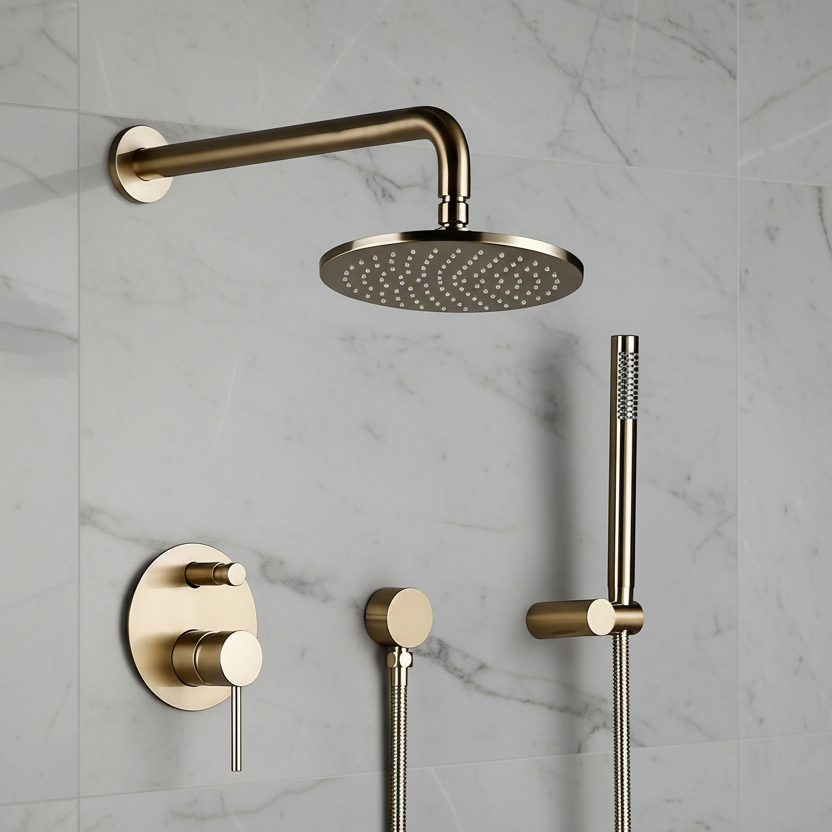
Matte black is the boldest finish in the modern bathroom — and the most misunderstood at cleaning time. The powder-coated surface that gives it that deep, light-absorbing look is durable against daily use but unforgiving of the wrong cleaner. One scouring pad or one bleach-based spray can leave permanent gloss patches on a finish that's otherwise built to last decades. The good news: caring for matte black correctly is easier than caring for chrome.
Here's the complete routine — what to use, what to never let near the finish, and how to fix the most common issues without damage.
Why Matte Black Needs Its Own Rules
Matte black fixtures start as solid brass, then receive an electrostatically applied powder coating cured at high heat. That coating is what creates the uniform, non-reflective surface — and unlike a metal plating, it's a painted layer, chemically bonded but still vulnerable to abrasion and harsh solvents. Scratch it and there's no "polishing it out"; the damage exposes gloss beneath the matte texture.
The flip side is a genuine everyday advantage: matte surfaces don't show fingerprints or water spots the way polished finishes do. A matte black faucet needs less frequent cleaning than chrome — it just needs the right cleaning.
The 60-Second Weekly Routine
1. Wet a microfiber cloth with warm water and a drop of mild dish soap.
2. Wipe the faucet body, spout, and handle — no pressure needed.
3. Rinse the cloth, wipe again to lift soap residue.
4. Dry with a second soft cloth. Done.
Hard Water Spots on Matte Black
Mineral spots are the one job where a diluted vinegar solution (1:3 with water) is acceptable — applied to the cloth, never the fixture, wiped promptly, rinsed, and dried. Never let acid dwell on the coating. For stubborn scale around the aerator, unscrew the aerator itself and soak that part alone; don't soak the finished body.
Fixing Scuffs and Shine Marks
Light shine marks from abrasion can sometimes be softened by cleaning the area and evaluating in daylight — but honest answer: significant gloss patches in a powder coat are permanent. Prevention is the whole game, which is why the routine above matters. Deep chips on a quality fixture are warranty territory; every matte black fixture we carry is covered for two years against finish defects.
Shopping the look? See the full range across matte black bathroom faucets, matte black kitchen faucets, and the wider matte black collection including shower systems.
Frequently Asked Questions
Can I use glass cleaner on matte black faucets?
Skip it — most glass cleaners contain ammonia. Soapy water does everything glass cleaner would, without the risk.
Do matte black faucets fade over time?
Quality powder coatings are UV-stable and won't fade indoors. What ages a matte finish is abrasion and chemical damage — both fully preventable with the routine above.
Why does my matte black faucet look chalky?
That's usually dried soap or mineral film, not finish damage. A thorough wipe with clean water followed by drying restores the depth.