Modern culinary spaces demand fixtures that marry functionality with ergonomic excellence. The contemporary kitchen has evolved into a dynamic workspace where efficiency dictates success, and nowhere is this more apparent than in the selection of water delivery systems. Pull-down spout faucets have emerged as the quintessential solution for homeowners and design professionals seeking to optimize workflow while maintaining aesthetic coherence.
These versatile fixtures transform routine tasks into streamlined operations, addressing the multifaceted demands of food preparation, cleanup, and vessel filling. Understanding the comprehensive advantages of this faucet configuration enables informed decision-making for renovation projects and new construction alike.
The Ergonomic Revolution in Kitchen Fixtures
Ergonomics transcends mere comfort; it represents the scientific study of people's efficiency in their working environment. In culinary settings, this translates to reducing physical strain while maximizing productivity. Traditional fixed-spout faucets constrain movement and force users to maneuver cookware and produce around a stationary water source.
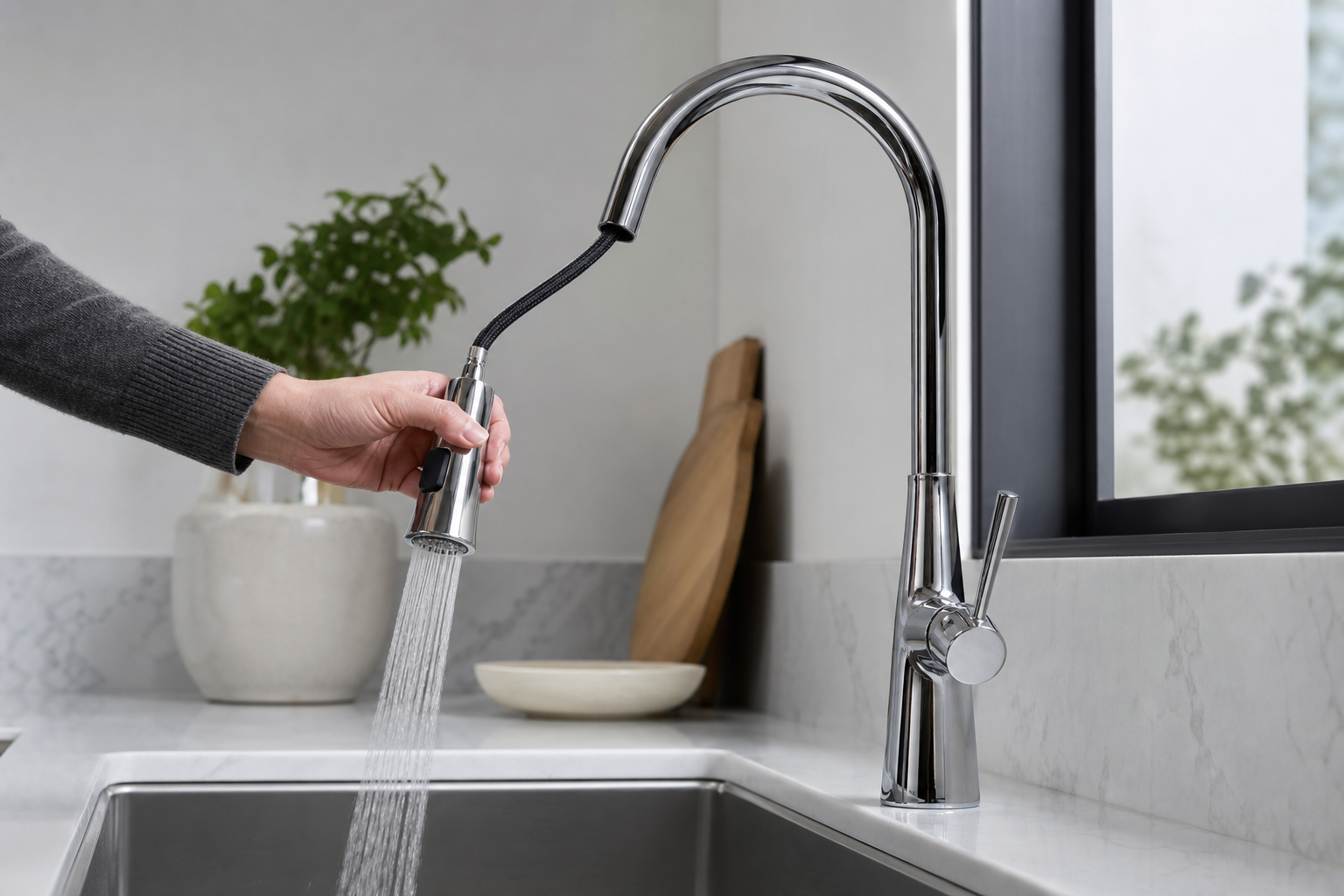
Pull-down mechanisms liberate users from these spatial limitations. The articulated spray head descends directly to the task at hand, eliminating awkward angles and repetitive reaching. This fundamental shift in design philosophy acknowledges that water should come to the work, not the reverse. For individuals spending considerable time at the sink—whether washing vegetables, filling stockpots, or rinsing baking sheets—this distinction manifests in reduced fatigue and enhanced comfort throughout extended kitchen sessions.
The wand-style spray head typically extends eighteen to twenty-four inches from the base unit, providing unprecedented access to all corners of oversized farmhouse sinks and deep basin configurations. This range of motion proves particularly valuable when addressing awkwardly shaped items like roasting pans or tall vases that defy conventional washing approaches.
Precision Water Delivery and Control
Beyond reach, pull-down faucets excel in delivering water exactly where needed with remarkable precision. The handheld nature of the spray head allows for targeted application, minimizing splashing and water waste. This controlled delivery system proves advantageous when rinsing delicate produce, filling containers with narrow openings, or spot-cleaning specific areas of the sink basin.
Spray Pattern Versatility
Contemporary pull-down models incorporate multiple spray functions, typically toggled via an intuitive button or lever on the spray head. The most common configurations include:
- Aerated stream for general washing and gentle rinsing
- Powerful spray for removing stubborn debris from dishes and surfaces
- Pause function to temporarily halt water flow without adjusting valve controls
- Sweep spray patterns that cover wider surface areas efficiently
This functional diversity eliminates the need to adjust water pressure at the base valve constantly, allowing seamless transitions between tasks. The ability to switch from a gentle stream for filling wine glasses to a forceful spray for dislodging baked-on residue exemplifies the adaptive nature of these fixtures.
A Premium Solution: The Maison Antique Brass Pull-Down Spout Kitchen Faucet
For those seeking to integrate pull-down functionality with enduring construction and distinctive aesthetics, the Maison Antique Brass Pull-Down Spout Kitchen Faucet represents a compelling option. Crafted from solid brass with an antique brass finish, this fixture addresses the common challenge of balancing operational excellence with design continuity.
The Maison configuration features a spring-reinforced hose that ensures smooth extension and reliable retraction—eliminating the drooping and resistance issues that plague inferior models. Its ceramic disc valve construction guarantees drip-free performance and extended operational lifespan, while the dual-function spray head transitions effortlessly between stream and spray modes. The antique brass patina introduces warmth and character that complements both traditional and transitional kitchen aesthetics, creating a focal point that transcends purely utilitarian considerations.
This particular model exemplifies how premium materials and thoughtful engineering coalesce to address the ergonomic demands of active kitchens while providing the durability specifications that contractors and designers require for long-term satisfaction.
Installation Considerations and Spatial Requirements
While pull-down faucets offer substantial functional advantages, successful implementation requires attention to specific installation parameters. These fixtures necessitate adequate deck-plate openings and sufficient clearance beneath the mounting surface to accommodate the retractable hose mechanism.
Undercounter Clearance
The hose assembly that enables pull-down functionality typically requires a minimum of sixteen inches of unobstructed vertical space beneath the sink deck. Homeowners with densely packed sink cabinets may need to reconfigure storage solutions to prevent hose interference with soap dispensers, water filtration systems, or waste disposal units.
Additionally, the supply line connections must allow for the hose's range of motion without creating kinks or stress points that could compromise long-term reliability. Professional installation often includes securing the hose weight—a small cylindrical component that assists the spray head's automatic retraction—at the optimal position along the hose length.
Mounting Configuration Options
Pull-down faucets accommodate various mounting scenarios, from single-hole installations that maximize counter space to three-hole configurations that incorporate separate handles or accessory components. Deck-plate adapters can bridge non-standard spacing, providing flexibility when retrofitting existing sink platforms.
Maintenance Advantages and Longevity Factors
The engineering sophistication inherent in quality pull-down faucets translates to practical maintenance benefits. Unlike traditional faucets where aerators become clogged with mineral deposits, pull-down spray heads typically feature larger outlet ports that resist calcification. Many contemporary models incorporate silicone nozzles that allow manual debris removal through simple finger pressure—a feature commonly termed "easy-clean technology."
The hose mechanism itself, when constructed with reinforced materials and proper spring tensioning, requires minimal intervention beyond occasional inspection. Premium manufacturers employ braided stainless steel or reinforced polymer hoses that withstand thousands of extension cycles without degradation. The quick-connect fittings standard in modern installations facilitate straightforward hose replacement should the need arise after years of service.
Solid brass construction represents the gold standard in faucet longevity, offering superior corrosion resistance and structural integrity compared to zinc alloy alternatives that may fail prematurely in high-use environments.
Workflow Enhancement in Professional and Residential Settings
The operational efficiency gains provided by pull-down configurations extend beyond simple convenience. In households where multiple individuals prepare meals simultaneously, the extended reach prevents workspace conflicts by allowing one person to fill containers at the sink while another works at adjacent counter areas.
For culinary enthusiasts managing complex recipes with numerous components, the ability to quickly rinse herbs, fill saucepans, and clean utensils without repositioning implements represents a meaningful time savings that compounds across meal preparation. The spray function accelerates the breakdown of food particles in sink basins, reducing the elbow effort required during cleanup operations.
Commercial-Grade Performance for Residential Applications
Many residential pull-down faucets incorporate design elements refined in commercial kitchen environments, where durability and efficiency directly impact operational costs. The spring-assisted hose retraction mechanism, originally developed for restaurant applications, ensures the spray head returns securely to its docked position after each use—preventing countertop clutter and maintaining visual order.
High-arc spout configurations, another commercial kitchen staple, provide clearance for filling large vessels and maneuvering items beneath the faucet body. This generous overhead space proves particularly valuable in homes where canning, brewing, or large-batch cooking represents regular activities.
Material Selection and Finish Durability
The longevity and performance of pull-down faucets correlate directly with material quality and finish application techniques. Solid brass construction offers unmatched durability, resisting the corrosive effects of water exposure and chemical cleaners that degrade lesser materials over time.
| Material Component | Performance Characteristic | Longevity Impact |
|---|---|---|
| Solid Brass Body | Superior corrosion resistance | Decades of reliable service |
| Ceramic Disc Valves | Drip-free closure | 500,000+ operation cycles |
| Reinforced Hose | Maintains flexibility | Resists kinking and cracking |
| PVD Finish Application | Scratch and tarnish resistance | Maintains appearance indefinitely |
Physical Vapor Deposition (PVD) finishes represent advanced surface treatment technology that bonds metallic coatings at the molecular level. Unlike electroplated finishes that may wear through with repeated cleaning, PVD applications maintain their appearance and protective properties throughout the fixture's operational lifespan. This durability proves particularly relevant for frequently handled components like pull-down spray heads.
Addressing Common Operational Concerns
Prospective buyers often question whether pull-down mechanisms maintain their functionality over extended periods or whether the hose retraction system becomes sluggish or fails entirely. These concerns, while valid for economy-grade fixtures, rarely materialize with properly engineered products featuring quality spring mechanisms and weight-assist systems.
Spray Head Docking Security
Magnetic docking systems have emerged as the preferred solution for ensuring spray heads return securely to their parked position. Powerful rare-earth magnets embedded in the spout guide the spray head into proper alignment while creating sufficient holding force to prevent drooping or dislodging during routine sink use. This technology addresses earlier generation pull-down faucets that relied solely on weight and friction for docking stability.
Hose Retraction Consistency
Spring-reinforced hoses maintain consistent retraction force throughout their service life when manufactured with corrosion-resistant springs properly sized for the hose weight and length. The inclusion of an adjustable counterweight allows users to fine-tune retraction tension, accommodating individual preferences and ensuring the spray head neither retracts too forcefully nor too sluggishly.
Design Coordination and Aesthetic Integration
While functionality drives the selection of pull-down faucets, their visual prominence in kitchen spaces demands equal attention to aesthetic considerations. The faucet serves as a sculptural element that can anchor a design scheme or provide subtle support to surrounding finishes and fixtures.
Contemporary design trends favor cohesive finish palettes that extend across cabinet hardware, lighting fixtures, and plumbing components. Pull-down faucets accommodate this approach through diverse finish options ranging from polished chrome and brushed nickel to oil-rubbed bronze and matte black. Specialty finishes like antique brass or champagne bronze introduce warmth and distinctiveness that complement natural materials and organic color schemes.
The architectural profile of the faucet—whether industrial and angular or fluid and traditional—should harmonize with cabinetry style and overall spatial character. A transitional kitchen benefits from faucets that balance clean lines with subtle detailing, while thoroughly modern spaces often favor minimalist geometries and seamless surface treatments.
Frequently Asked Questions About Pull-Down Kitchen Faucets
Do pull-down faucets require more maintenance than standard faucets?
Quality pull-down faucets require comparable maintenance to traditional configurations. The primary consideration involves occasional cleaning of spray head nozzles to prevent mineral accumulation, though this task typically proves easier than aerator cleaning due to accessible nozzle design and silicone construction that facilitates debris removal.
Can pull-down faucets accommodate pot-filler functionality?
While pull-down faucets excel at filling vessels of various sizes, they supplement rather than replace dedicated pot-filler faucets mounted at cooking surfaces. The extended reach of pull-down spray heads makes them highly effective for filling stockpots and large containers at the sink, eliminating the need to transport heavy, water-filled vessels across kitchen spaces.
What water pressure requirements do pull-down faucets have?
Most pull-down faucets operate effectively within standard residential water pressure ranges of forty to eighty pounds per square inch (PSI). Spray function performance benefits from pressure at the higher end of this range, though integrated flow restrictors ensure adequate performance across typical pressure variations. Homes with exceptionally low pressure may require booster pump installation for optimal spray function.
How do I select the appropriate spout height for my sink configuration?
Spout height should provide adequate clearance for the tallest vessels you regularly fill while avoiding excessive height that creates splashing issues. High-arc spouts measuring sixteen to twenty inches from deck to outlet accommodate most residential needs, while lower profiles suit compact sinks or installations where excessive height would interfere with overhead cabinetry or windows.
Value Proposition for Homeowners and Design Professionals
The investment in quality pull-down faucets yields returns through enhanced daily functionality, reduced physical strain, and enduring aesthetic appeal. For homeowners planning to remain in their residences long-term, the accumulated time savings and improved workflow justify premium pricing. The fixtures' prominence in kitchen spaces also ensures they influence overall satisfaction with the room more significantly than their cost percentage of total renovation budgets might suggest.
Design professionals and contractors benefit from specifying pull-down faucets that meet client expectations for both performance and longevity. Clear technical specifications—including flow rate, cartridge type, finish composition, and warranty coverage—enable confident recommendations and minimize callback risks. The thirty-day return policies and free expedited shipping offered by specialized retailers like Allfixture reduce project risk and timeline uncertainty.
Durable solid brass construction ensures these fixtures maintain operational integrity and visual appeal throughout decades of service, supporting the reputation of designers and installers who prioritize long-term client satisfaction over initial cost minimization. The detailed specifications available for premium models allow precise coordination with other fixture selections and provide clients with transparency regarding material quality and expected performance.
Installation Best Practices for Optimal Performance
Proper installation represents the foundation for pull-down faucet longevity and reliable operation. Beyond basic plumbing connections, several details warrant attention during the installation process to maximize long-term satisfaction.
Ensuring adequate hose movement beneath the sink prevents premature wear from friction against cabinet interiors or adjacent components. Securing supply lines with appropriate clearance from the hose pathway eliminates potential interference during spray head extension. The counterweight should be positioned to allow full hose extension while maintaining sufficient retraction force—typically achieved by placing the weight six to eight inches from the quick-connect fitting.
Deck-mounted installations benefit from ensuring the mounting surface provides adequate support for the faucet weight and operational forces. Thin or weak deck materials may require reinforcement plates to prevent flexing that could compromise seal integrity over time. Silicone sealant application around the base creates a watertight barrier that protects cabinetry from incidental moisture while facilitating future removal if necessary.
Testing all spray functions and checking for leaks at connection points before completing the installation prevents the need for subsequent disassembly and reinstallation. Running water through the system for several minutes flushes debris from supply lines and confirms proper operation across all spray modes.
The Future of Kitchen Faucet Technology
Emerging technologies continue to enhance pull-down faucet capabilities while maintaining the fundamental ergonomic advantages that define the category. Touchless activation systems respond to proximity sensors, reducing cross-contamination concerns and accommodating users with limited hand mobility. Voice-activated controls and smartphone integration allow precise temperature and flow rate programming for specific tasks.
Water filtration systems integrated directly into faucet bodies eliminate the need for separate filtration taps, streamlining counter configurations while providing purified water on demand. These systems typically incorporate filter life indicators that alert users when cartridge replacement becomes necessary, ensuring consistent water quality without guesswork.
Despite these technological enhancements, the core pull-down mechanism remains central to the category's appeal. The tactile satisfaction of extending the spray head to precisely where needed, the visual engagement of controlling water delivery directly, and the ergonomic benefit of bringing water to the task rather than vice versa ensure pull-down faucets will continue serving as the preferred solution for discerning homeowners and design professionals prioritizing kitchen functionality and comfort.