You've found the shower system you want, but before you buy, one question stops you: what's the total cost once installation is factored in? It's the right question to ask, because the fixture price is only part of the picture — and the installation cost swings enormously depending on one factor most shoppers don't think about until they're getting quotes. Here's the complete breakdown so you can budget accurately before you commit.
The Short Answer
For a straightforward trim-only swap — replacing a shower system where the in-wall valve stays put — expect $150–$350 in labor. For a full installation that opens the wall to replace the valve, expect $350–$900+ in labor, occasionally more if tile and plumbing rework are involved. The fixture itself is separate, and that's where you actually control the budget.
The One Factor That Changes Everything
Whether the job touches the in-wall valve is the single biggest cost driver. If you're keeping your existing valve and only swapping the visible trim, showerhead, and handle, it's a quick job with no wall demolition. The moment the valve itself needs replacing — because you're changing from pressure-balance to thermostatic, or the old valve is failing — the wall has to be opened, which pulls in demolition, plumbing, and tile repair. This is why deciding on your valve type before buying matters so much.
Full Cost Breakdown
| Cost Component | Trim-Only Swap | Full Valve Install |
|---|---|---|
| Labor | $150–$350 | $350–$900+ |
| Wall / tile repair | None | $100–$500+ |
| Plumber time | 1–2 hours | 4–8 hours |
| Permits (if required) | Rarely | Sometimes |
| The shower system | Your choice | Your choice |
Note that labor rates vary widely by region — a plumber in a major metro charges more than a rural one. Always get two or three quotes for anything involving the valve.
Where the Fixture Price Fits
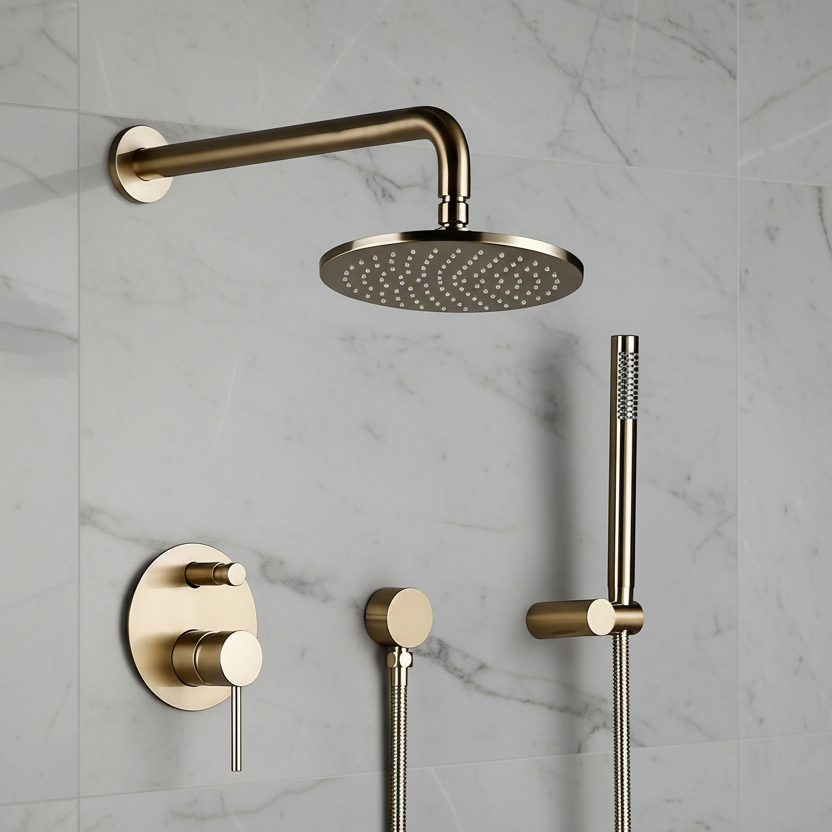
A complete shower system runs anywhere from under $200 to well over $1,000. The good news: this is the part of the budget you fully control, and spending smartly here doesn't mean spending the most. A solid brass shower system with a ceramic cartridge in the $400–$600 range delivers the build quality that lasts decades — the same internals as luxury-brand systems costing far more. Paying for a designer name doesn't buy you a better shower; the brass body and ceramic cartridge do.
How to Keep Total Cost Down
Can You Install It Yourself?
A trim-only swap is within reach for a confident DIYer — it's largely a matter of removing the old trim and fitting the new, with no plumbing behind the wall. A full valve replacement involves the wall cavity and water supply connections, and most homeowners hire a licensed plumber for that portion, then handle the trim themselves to save on labor. Exposed-pipe systems, which mount on the wall surface, are the most DIY-friendly of all because they avoid opening the wall entirely.
Frequently Asked Questions
How much does it cost to install a shower system?
A trim-only swap typically runs $150–$350 in labor. A full installation that replaces the in-wall valve runs $350–$900 or more, plus any tile and wall repair. The fixture is a separate cost you control.
Why is replacing the valve so much more expensive?
Replacing the valve means opening the wall, which adds demolition, plumbing time, and tile repair. A trim-only swap leaves the wall intact, so it's far faster and cheaper.
Can I install a shower system without opening the wall?
Yes, if you're doing a trim-only swap that keeps your existing valve, or if you choose an exposed-pipe system that mounts on the wall surface. Both avoid wall demolition.
Is it cheaper to buy a complete shower system or separate parts?
A complete matched system is usually cheaper overall — everything installs in one visit, the finishes match, and the components are engineered to work together, avoiding compatibility surprises.
Do I need a permit to install a shower system?
A trim swap rarely needs one. Valve replacement or moving plumbing sometimes requires a permit depending on your local codes — your plumber will know the local requirements.