Antique brass and oil-rubbed bronze are the two finishes shoppers confuse most — both warm, both aged, both at home in traditional and transitional bathrooms. But they read very differently in a room, age differently, and pair with different palettes. Choosing wrong means a faucet that fights the vanity instead of completing it. Here is exactly how they differ and how to pick.
The Core Difference in One Sentence
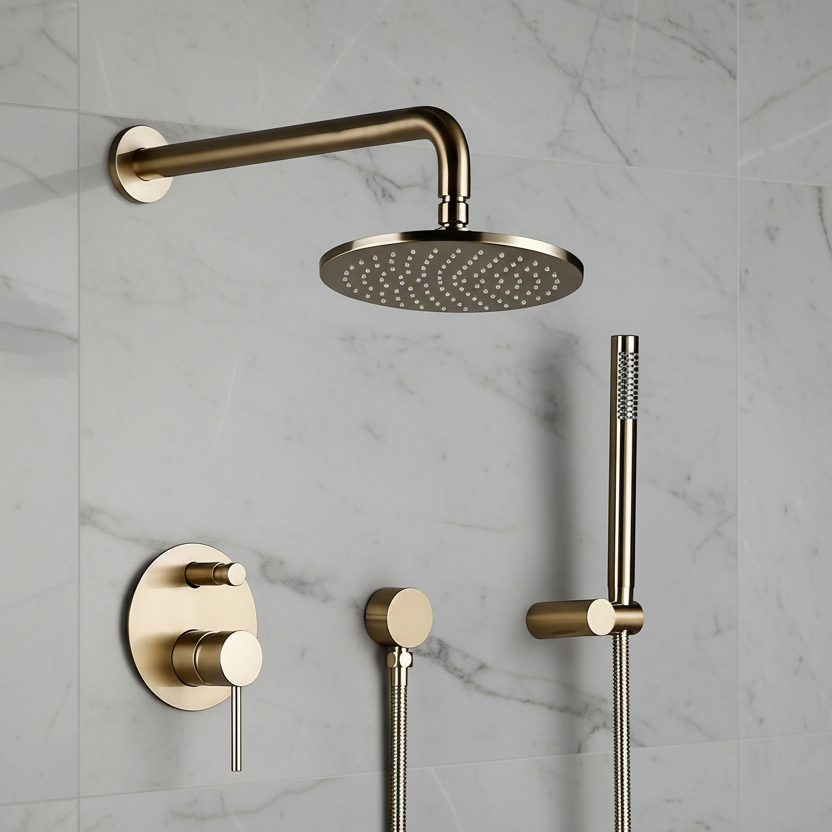
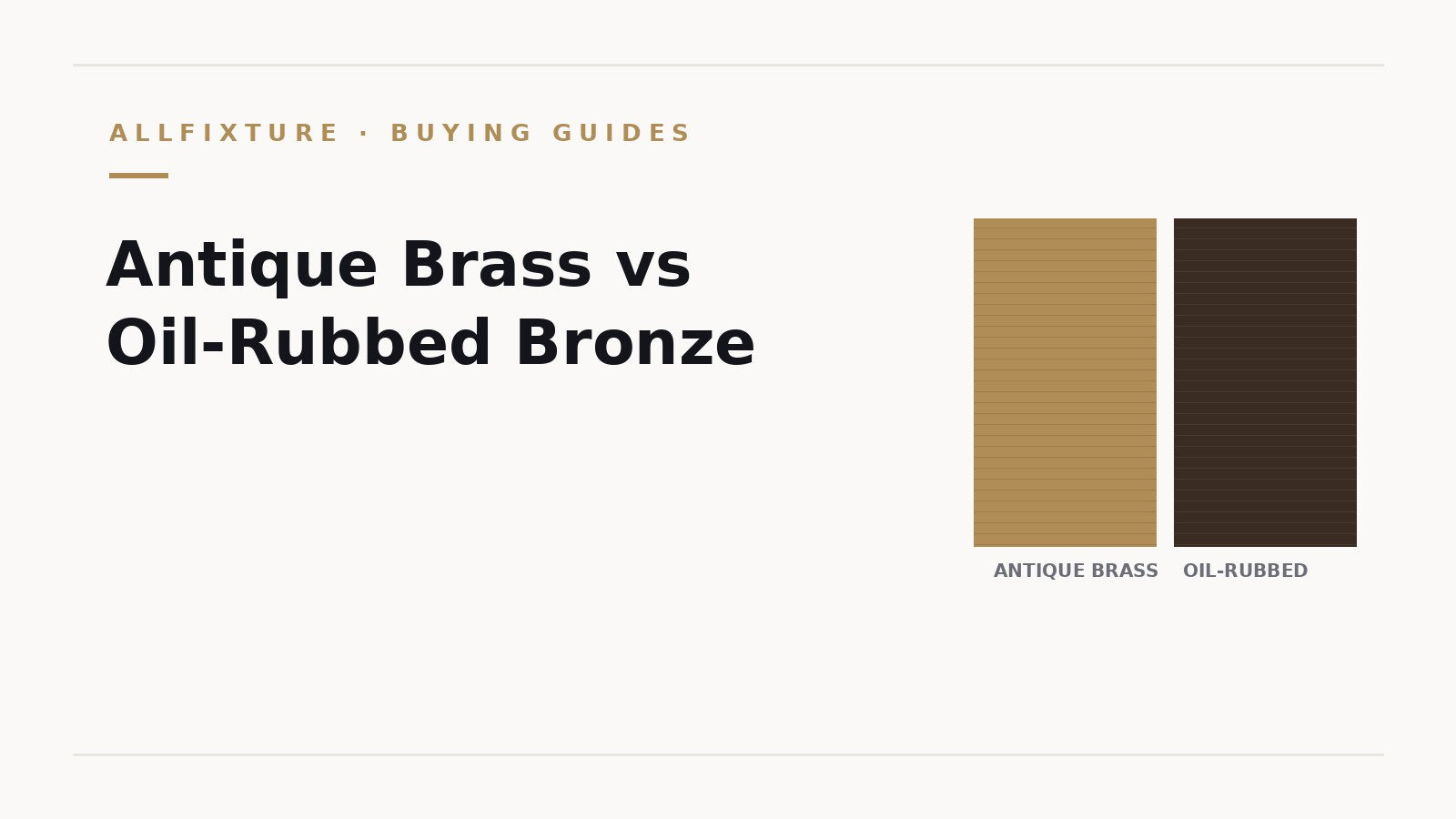
Antique brass keeps a warm gold undertone beneath its aged surface; oil-rubbed bronze is a darker, brown-black finish with far less gold. Under warm bathroom lighting the two are easy to tell apart — antique brass glows, oil-rubbed bronze recedes.
| Antique Brass | Oil-Rubbed Bronze | |
|---|---|---|
| Base tone | Warm gold, aged | Dark brown-black |
| Overall read | Glowing, vintage-luxe | Deep, rustic, moody |
| Best styles | Traditional, farmhouse, transitional | Rustic, Mediterranean, Craftsman |
| Pairs with | White marble, warm wood, cream | Slate, terracotta, dark stone |
| Hides water spots | Very well | Extremely well |
| Living finish option | Yes (patinas warmer) | Yes (high points rub lighter) |
How Each One Ages
Both can be sealed (stable forever) or unlacquered (living finishes that change with use). The direction they age differs: an unlacquered antique brass deepens and warms, gaining gold richness over years. An unlacquered oil-rubbed bronze does the opposite — high-touch points like handles and spout tips rub lighter, revealing warmer bronze or copper beneath the dark coating. Some homeowners love that lived-in contrast; others find it uneven. If you want a finish that stays exactly as delivered, choose a sealed version of either.
Which Should You Choose?
Shop Antique Brass Fixtures
AllFixture specializes in warm brass finishes. Every piece below is solid brass with a ceramic disc cartridge — the build that lasts decades in a humid bathroom. These are among our best-selling antique brass fixtures:


Frequently Asked Questions
Is oil-rubbed bronze the same as antique brass?
No. Antique brass has a warm gold undertone; oil-rubbed bronze is a darker brown-black finish. They come from different base treatments and read very differently in a room, especially under warm light.
Which finish hides water spots better?
Both excel, but oil-rubbed bronze hides spots marginally better because it's darker. Antique brass is close behind and far better than any polished finish.
Can I mix antique brass and oil-rubbed bronze?
It's difficult — they're close enough to look like a mismatch rather than an intentional contrast. If mixing metals, pair either one with a clearly different finish like matte black or chrome instead.
Does antique brass look cheap?
Not when it's solid brass. Quality antique brass has genuine tonal depth that thin plated finishes can't replicate. The base metal is what separates a luxe finish from a cheap one.
Which is more popular in 2026?
Antique brass has the stronger current momentum, riding the broader warm-metals trend. Oil-rubbed bronze remains a steady favorite in rustic and traditional homes but is less of a design-forward choice right now.
Will these finishes match my existing bronze hardware?
Check the undertone. Much hardware sold as 'bronze' is actually closer to oil-rubbed bronze or a warm champagne bronze. Order a single piece first to compare against what you have before committing to a full set.