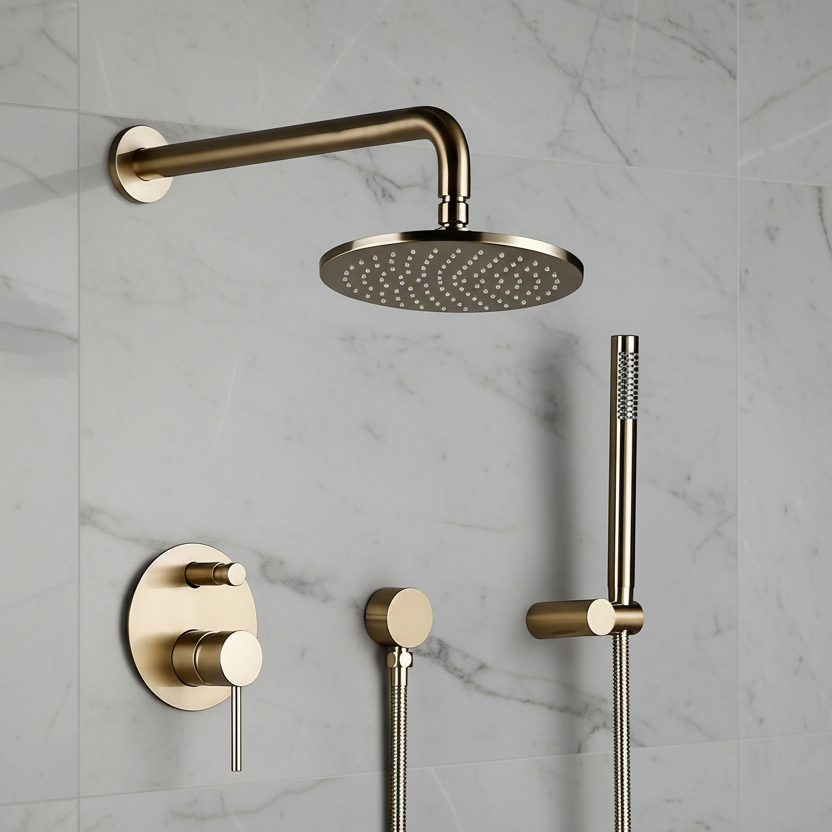
Gunmetal is the finish for people who find chrome too bright and matte black too stark. It sits in the smoky middle — darker than steel, softer than black, with a subtle depth that shifts in the light. It's also the finish most shoppers have never seen in person, which makes styling it feel like a risk. It isn't. Here's how gunmetal behaves in real bathrooms, and the palettes where it goes from safe to spectacular.
What Gunmetal Actually Looks Like
Picture polished dark pewter: a deep gray with a quiet sheen, warmer and more dimensional than flat black, cooler and moodier than nickel. On a solid brass fixture the finish reads as substantial — it has the visual weight of black without absorbing every bit of light around it. In dim bathroom lighting gunmetal holds its detail where matte black can flatten into silhouette.
Palettes Where Gunmetal Thrives
Where to Use It
Gunmetal's subtlety rewards proximity — it's a finish you appreciate at the vanity, which makes gunmetal bathroom faucets the natural entry point. From there, carrying it through shower trim and accessories in the wider gunmetal collection builds the cohesive smoky thread through the room.
Frequently Asked Questions
Is gunmetal the same as matte black?
No — matte black is a flat, non-reflective powder coat; gunmetal is a deep gray with a soft sheen and visible metallic depth. Black states; gunmetal suggests.
Does gunmetal work in traditional bathrooms?
It leans contemporary, but on classic silhouettes — cross handles, widespread sets — it reads as modern heritage, similar to how aged iron hardware works in traditional kitchens.
What lighting suits gunmetal best?
Warm white (2700–3000K) brings out its depth. Under cold blue light any dark gray can go flat, so if your bath runs cool, consider warming the bulbs before judging the finish.