Can you mix metal finishes in one bathroom? Yes — designers do it constantly, and it's often what separates a custom-looking space from a catalog page. But there's a real difference between a curated mix and a remodel that ran out of matching parts. The difference comes down to three rules.
Rule 1: One Dominant, One Accent
Pick a lead finish for the plumbing — faucet, shower trim, tub filler — and give it roughly two-thirds of the metal in the room. The second finish takes the supporting cast: mirror frame, cabinet hardware, lighting, towel bars. A 70/30 split reads as intentional; a 50/50 split reads as indecision.
Rule 2: Contrast, Don't Neighbor
Mixes work when the two metals are clearly different: matte black with brushed gold, gunmetal with warm brass, chrome with matte black. They fail when the metals are near-twins — brushed nickel with chrome, or brushed gold with polished gold — because adjacent finishes look like a matching attempt that missed. If two finishes share a color family, commit to one. (Torn between the golds specifically? That decision has its own guide: brushed vs polished gold.)
Rule 3: Keep Wet Zones Consistent
All plumbing that touches water — sink faucet, shower system, tub spout — stays in the dominant finish. Mixing finishes within the plumbing set is the single most common mixing mistake, and the one the eye catches instantly. Save the accent finish for everything that doesn't carry water.
Three Proven Combinations
| Combination | Dominant (Plumbing) | Accent (Hardware & Light) | The Effect |
|---|---|---|---|
| Modern warmth | Matte black | Brushed gold | High contrast, current, endlessly photographed |
| Quiet luxury | Brushed gold | Matte black | Warm lead with grounding dark details |
| Smoky sophistication | Gunmetal | Warm brass or gold | Layered, moody, unexpectedly refined |
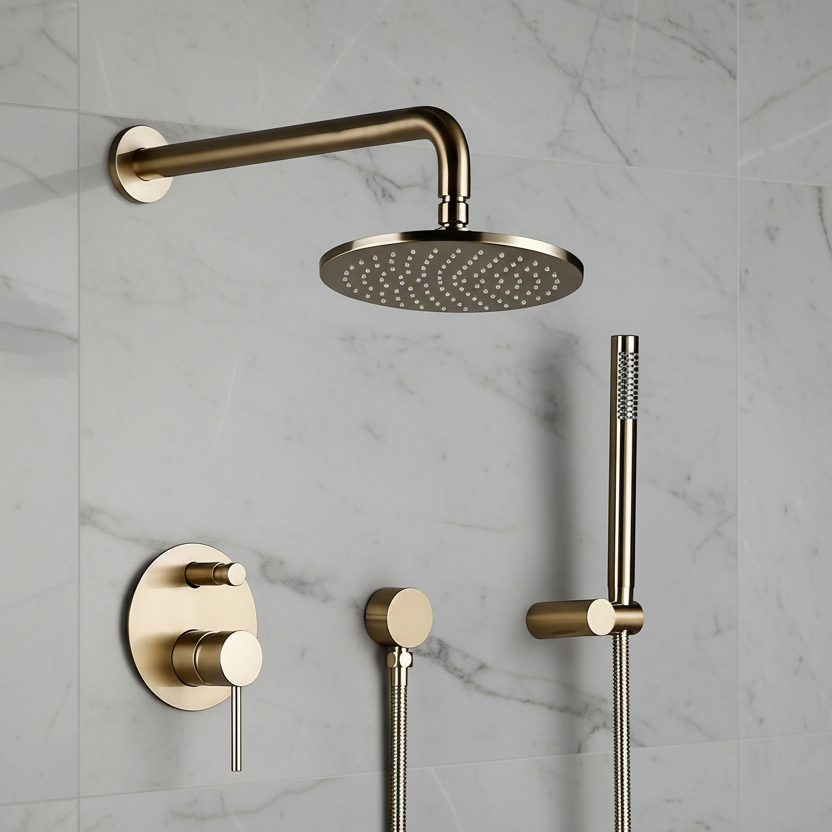
Build the dominant layer first from matte black, gold, or gunmetal bathroom faucets, then bring the accent in through the small pieces. If the shower is part of the project, carry the dominant finish through a matching system — gold shower systems pair with the first two combinations directly.
Frequently Asked Questions
Do door hardware and plumbing finishes need to match?
No — doorknobs and hinges live in the room's architecture layer and can follow the house standard while the bathroom runs its own metal story.
Should faucet and light fixture finishes match?
They can, but they don't have to. Lighting is prime accent territory: a brushed gold sconce over a matte black faucet is a classic execution of Rule 1.
Can I mix finishes between bathroom and kitchen?
Absolutely — rooms are independent. Consistency matters within a sightline, not across the whole house.
Considering antique brass? Read the complete guide: Antique Brass Bathroom Fixtures.