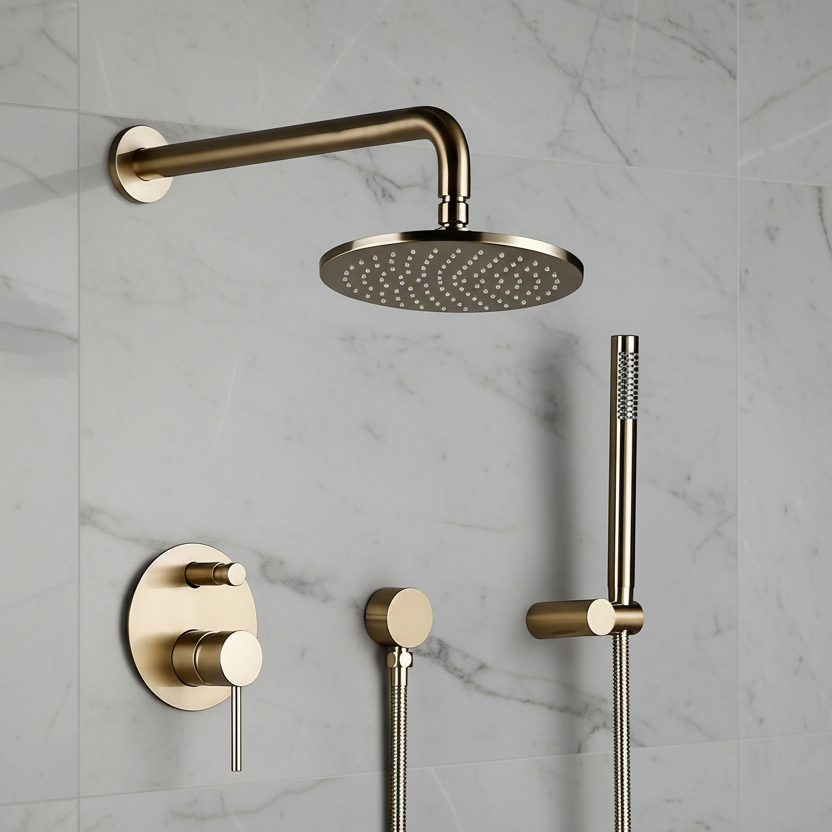
Brushed nickel earned its reputation as the zero-drama finish: it hides fingerprints, shrugs off water spots, and looks intentional in almost any kitchen or bath. But "low maintenance" isn't "no maintenance" — and the few mistakes that do damage brushed nickel are the same ones people make trying to make it shine like chrome. Here's how to keep the satin surface looking new for decades.
What Brushed Nickel Actually Is
Brushed nickel is a nickel plating over solid brass, finished with fine directional brushing that creates its signature soft grain. That grain is the whole personality of the finish — it scatters light, which is why prints and spots disappear into it. Care revolves around one principle: protect the grain. Clean along it, never scour across it, and never use anything that would polish it smooth.
The Simple Routine
Weekly or whenever it needs it: warm water, a drop of dish soap, microfiber cloth, wipe along the grain direction, rinse-wipe, dry. That's the entire program for 95% of situations. The drying step is the one people skip — it's what prevents mineral film from building in the first place.
Hard Water and Mineral Film
If your water is hard, brushed nickel's satin surface can slowly develop a dull film. Restore it with a 50/50 white vinegar and water solution applied to the cloth, wiped along the grain, rinsed immediately, and dried. For crusted deposits at the spout tip, remove the aerator and soak it separately — same rule as every quality finish: soak parts, never the plated body.
Styling Longevity
Part of caring for a finish is choosing it where it thrives. Brushed nickel excels in hardworking rooms: family bathrooms, kitchen prep sinks, laundry rooms — anywhere daily use would betray a polished surface. Browse brushed nickel kitchen faucets for the workhorse installs, or the full brushed nickel collection across bath and shower.
Frequently Asked Questions
Brushed nickel vs stainless steel — is the care different?
Similar routines, different materials: brushed nickel is plated brass with a warmer undertone; stainless is solid steel and slightly more chemical-tolerant. The soap-water-dry routine keeps both perfect.
Can I make brushed nickel shinier?
Don't try — polishing removes the brushed texture permanently and creates glossy patches. If you want shine, the right move is choosing chrome or polished gold, not converting a satin finish.
Does brushed nickel rust?
The nickel plating doesn't rust. Orange spots that wipe away are usually iron deposits from the water itself, not the fixture — a filter or softener addresses the source.